Amelia’s Magazine | An interview with Jonny Gordon-Farleigh, editor of STIR magazine

STIR to Action book cover by Bec Young
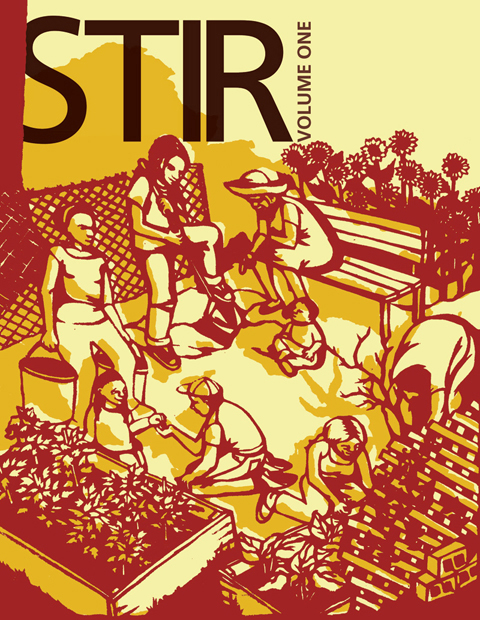
STIR Vol.1 cover by Bec Young.

New magazine STIR carries the strap line ANGER. ANALYSIS. ACTION. For anyone disillusioned with the current state of affairs it’s a must read collection of articles, interviews and radio shows which question the direction in which our supposedly ‘civilised’ world is going. This weekend they take part in the Stoke Newington Literary Festival, chairing a discussion about ethical fashion at 12.30 on Sunday 9th June at the Town Hall.
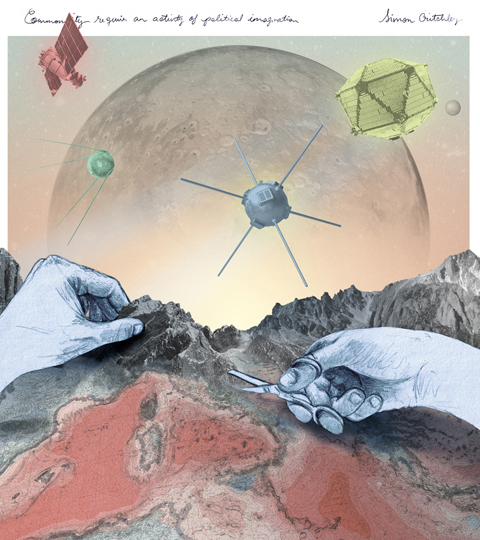
STIR to Action book illustration by German Gullon
STIR to Action book illustration by German Gullon.

Find STIR to Action online and now in print, as a volume of collected writings and interviews about co-operative and community-orientated alternatives, all accompanied by imaginative illustrations (many of which have been created by artists that will be familiar to Amelia’s Magazine readers). I spoke with founding editor Jonny Gordon-Farleigh.

Food-Justice-STIR-to-Action-Book-illustration-by-Sarah-Jayne-Morris
Food Justice, illustration by Sarah Jayne-Morris.

Stir has made the leap from online to printed publication: first as the book, STIR Vol.1 and now as a print version of the magazine. What prompted the move and what has the journey to print been like? A steep learning curve?
I think all platforms – both online and offline – are really important and we are still publishing online but also as a quarterly print magazine. I think we need to use different platforms strategically and so I’m not going to say one is more important than the other. It’s obviously very difficult to publish time-sensitive articles in a quarterly magazine that only appears every three months. I like to think of our quarterly magazine as slow news – issues that need time to be properly analysed and understood and to also give space to develop potential alternatives. On the other hand, if a campaign group wants to publish a piece about an event or mobilisation next week then I will publish on the online blog and distribute via social media. We are also looking into publishing a small free paper with selected content from the online blog and print issue so it can reach places that don’t sell magazines, such as social enterprise co-working spaces. It has actually been a well-paced launch into print from building an online readership to building an offline community through events. I needed to know and felt we had the support before launching into print.

STIR to Action Book illustration by Alex Charnley
STIR illustration by Alex Charnley.

Was crowd funding easy to do? What have been the highs and lows of taking this route to publication? 
Crowdfunding was an interesting process for so many reasons. Firstly, crowdfunding allows us to fund projects without appealing to wealthly individuals – philanthropists – and also avoids the restrictions and conditions of grant-making bodies. Also, it creates an international community of co-creators and contributors for your project: Those who couldn’t contribute financially, offered their skills as graphic designers and artists. We even launched the book at The Firebox because a campaign group (Counterfire) couldn’t give us money as they were fundraising themselves, but did have an amazing event space in Kings Cross. Crowdfunding also allows you to self-publish and this gives you control over the creative process. The biggest problem with self-publishing is distribution and this is something we need to seriously address. The publishing industry had a monopoly on this before the emergence of the internet but anyone will tell you that it’s still really difficult to distribute your own work. (Hell yeah! – Amelia) So finding ways of distributing the funded book was certainly challenging.

STIR to Action book illustration Wizard of Oz by Edd Baldry
Wizard of Oz, STIR illustration by Edd Baldry.

How did you find the contributing illustrators, and what was the process of their contribution?
I had worked with a few of the contributing illustrators before – Edd Baldry and India Rose Harvey — and also knew a few from other publications like the Occupied Times (Alex Charnley). However, Twitter was very helpful in finding new illustrators (thanks for the tweet Amelia!!) and I would have to say most of them enthusiastically responded to a call-out on Twitter. The creative process was largely asking them to respond to the an article. We would then talk about the ideas and see what could work to represent the piece. Every artist is different and that’s what makes it so interesting.

STIR to Action Book illustration by India Rose Harvey
STIR illustration by India Rose Harvey.

How did you decide on the content of STIR Vol.1? Who contributed and what have they written about?
The content for STIR Vol.1 was selected from two years’ worth of online publishing at www.stirtoaction.com and we chose the articles and interviews that really showcased the emerging community-led and co-operative alternatives in our food and finance systems. We then invited 10 artists to contribute original pieces of art for the printed publication (see above).

We had a whole range of contributors including an economist, David Boyle, from the New Economics Foundation who wrote about the disconnect between wealth and money and how we need to design and scale-up alternative forms of exchange such as local currencies. The philosopher and Defend the Right to Protest activist Nina Power analysed the London Riots of 2011 with a review of a new book that was published on the events. I also published a piece by Guppi Bola and Bethan Graham about food justice, why the food system is broken and what creative communities around London are doing to change it for the better. We also featured the story of the Real Food store in Exeter that came out of Transition Exeter and was funded through a community share scheme, as a look at the rise of new social enterprises. The founders of Co-opoly – the boardgame of co-operatives – wrote about their new creation and how Monopoly was originally created during the New Deal era in America to teach tenants how to deal with bad landlords.

STIR to Action Book illustration by Alicja Falgowska
STIR illustration by Alicja Falgowska.

Anger is a cornerstone of your creation, which is somewhat at odds with the positivity of the Transition Network, of which you are part. Why do you think it’s important to find an outlet for anger?
It’s an interesting question and I definitely think there is a case for anger. There is something almost admirable about the Transition Network’s early decision not to engage with what might be called antagonistic campaigns, but there has definitely been a significant shift recently — the ‘No’ campaign to Costa Coffee in Totnes was fully supported by Transition Town Totnes. Also, I think it’s important to say that ‘No’ campaigns are far more effective and likely to succeed if they are part of a positive effort – like the initiatives that make up the Transition Network.

Also, insisting on always being positive is problematic as it can become as counterproductive as being the constant bearer of bad news, an argument that Smartmeme – a creative campaign agency – make in STIR Vol.1. So I think it’s philosophically shallow to see anger as a deformative emotion, if it’s part of a campaign for change it can have a reformative effect. Anger without new political options can be dangerous and that’s why the positive work of the Transition Network is really important. It’s worth saying that anger only transforms into cynicism when we accept the false political choices we are given and give up on alternatives.

STIR magazine issue 01 2013
STIR magazine issue 01 2013.

Another point to make is that as the Transition Network scales-up and mainstreams itself, it will have to challenge the current distribution of resources and space. It is not good enough to say that you won’t shop at a multinational supermarket, when they are draining resources and space from the communities, distorting business rates, and making it far more difficult for community-owned shops to establish themselves.

This can also be explained by an interview with George Monbiot about land inequality and how UK land prices have gone up 10-12% in the last few years. The land buyers, in this instance, are city bankers who are using their bonuses to invest in land. This has made it ten times more difficult to use the land for alternative purposes, such as land co-operatives and community farms. We need to be angry about this and find ways of challenging land inequality and access if we going to be able to do the positive work that the Transition Network promotes.

On top of this, while the aspiration to generate your own energy is something we all should be pursuing, we also need to insist – through protest, direct action and lobbying — that the fossil fuel industries keep it in the ground. All of that positivity will be irrelevant if these industries are not disrupted by public action. Lastly, I’m very suspicious of categorising activists. It suggests that there is one kind of person who will do the negative work, such as lying on airport runways or occupying power stations, and then on the other side you have the people who do all the positive activity like community gardens and upcycling workshops. I think we have the capacity to do both but should always remember to do it for the fun of it!

Will there be a STIR Vol.2? If so what can we expect from it?
As we’ve launched a quarterly magazine, the STIR volumes will most likely be bi-annual. We publish so many unpredictable stories I couldn’t really say!

Where can people get hold of the publication?
We sell STIR Vol.1 in our online shop here, and readers can sign up for a subscription for the quarterly magazine here. Our quarterly magazine – STIR – is being sold in 30 shops across the UK (find stockists here) and we have just started working with an ethical distributor – INK – so potentially lots more in the near future. You can buy the first issue of our new magazine with this Amelia’s Magazine Special Discount offer: click here for 25% off cover price and free P&P (£2.95).

What are your hopes for 2013?
It would have to be to continue to collaborate with more social enterprises and co-ops in working towards bringing the ideas in the magazine into our communities.

Categories ,Alex Charnley, ,Alicja Falgowska, ,Bec Young, ,Bethan Graham, ,Co-opoly, ,Counterfire, ,Crowdfunding, ,David Boyle, ,Defend the Right to Protest, ,Edd Baldry, ,George Monbiot, ,German Gullon, ,Guppi Bola, ,India Rose Harvey, ,INK, ,Jonny Gordon-Farleigh, ,Kings Cross, ,London Riots, ,New Economics Foundation, ,Nina Power, ,Occupied Times, ,Real Food, ,Sarah Jayne Morris, ,Smartmeme, ,STIR, ,STIR to Action, ,STIR Vol.1, ,Stoke Newington Literary Festival, ,The Firebox, ,Totnes, ,Town Hall, ,Transition Exeter, ,Transition network, ,Transition Town Totnes, ,twitter

Similar Posts:


Amelia’s Magazine | An interview with Edd Baldry of London Zine Symposium

aniela-murphy-zinesymposium
Illustration by Aniela Murphy/Neltonmandelton.

The Rag Factory, this Brick Lane, page will be playing host to The London Zine Symposium on the 29th of May, capsule an event celebrating DIY culture, promoting communal idea sharing and, naturally, selling a few zines. Inspired by the Portland Zine Symposium, it’s been running since 2005 and just keeps getting bigger. This year there are over 70 stalls dedicated to zines, small presses and comics, with crafty bits to see and do round every corner, as well as discussions, readings and workshops.

The Symposium runs from 12pm, kicking off with the kids’ comic workshop, making things nice, and monstrous, (pretend to be my guardian? Anyone?) and all through the day you can make your own artist trading cards! They’ll be providing all the ingredients you need, though you’re welcome to take along your own cutouts and magazine bits. These excite me more than necessary, probably because I always wanted to be a Pokémon…

The first discussion of the afternoon will focus on the DIY ethos of zine-making and its applications in the wider world – a must for anyone interested in subverting mainstream media and working their socks off to get heard. It’s not limited to the world of paper either, they’ll also be talking about forming bands and organising spoken word tours. Charlotte Cooper, a queer fat researcher and activist, and Josie Long, that stand- up comedian, are among those reading from selections and the event will be nicely rounded off by Tea Hvala and a collaborative writing working, taking the surrealist drawing game the exquisite corpse and translating it to writing, so that each story becomes everybody’s story.

aniela-murphy-zinesymposium
Illustration by Aniela Murphy/Neltonmandelton.

I asked Edd Baldry, one of the organisers, about the superiority of zines to blogs, the importance of DIY culture, and whether they’ve ever been overwhelmed by care bears…

Could you tell us a bit about the beginnings of the London Zine ? Symposium? What inspired you to start it up? Was it very popular at ?first? How has it grown?
Edd Baldry : I was part of a collective squatting a cool building in central ? London, which we’d called the Institute for Autonomy. I was helping to? run an infoshop in the space as well as producing a large collective ? zine – Rancid News – which we distributed across the UK and Europe. So ?I was interested in getting more zine kids involved in radical spaces and radical spaces having zines that weren’t necessarily explicitly ? political. I’ve got to acknowledge though that the name, and the ? inspiration, was taken wholesale from the Portland Zine Symposium who ? do an awesome event in the US north-west every year.? From our point of view it was really popular straight away. I wish ?all the projects I’m involved with were this easy to organise. We had ? about 400 people come, with 12 stalls, at the first event and it’s ?grown steadily each year. Last year we had about 1,400 people come along, with 64 stalls selling their wares.? ? ?

What, exactly, is a zine and what part does it play in DIY culture? ? What makes a good zine? In this techno-focused age, what’s their ?attraction? Isn’t it easier and quicker to start/read a blog?
?EB: A zine is really whatever you want it to be. The only caveat is that ?it’s something that you produce yourself for yourself – at least? that’s what I think of when I think of zines. I think that zines have ? been a vital part of DIY culture since they became prevalent in the ? punk and radical scenes in the late 70s. Riot Grrrl’s a pretty good ?example where the ideas and culture of that scene were communicated ?through zines just as much as they were through the music.? ?It’s difficult to say what makes a ‘good’ zine – there’s such a variety that there’s no magic bullet. There are zines that are amazing ?because they’re beautifully illustrated, others because the ?illustrations look like a three year-old drew them. I guess anything ?that has passion for something in them is interesting and zines are no ?exception.? ?I think the attraction of zines has grown as the internet has. Having ?something that is tangible and final is quite attractive in a world of ?24 hour rolling news and ever changing churn of the internet. Also, ?zines can be read when you’re having a bath, a definite advantage over computers!? ? ?

Does the zine scene go through fads and phases like every other scene? ?Have you ever been overwhelmed by frogophiles, or carebear ?afficionados, for instance?
?EB: No, the symposium’s yet to be overrun by carebear or frog zines. But ?yeah the zine scene does tend to go through waves every few years. A ?few years ago it felt like it was totally dominated by punk zines, in ?2007/8 it felt like a lot of people who made comics started consciously ?making them as zines. More recently it seems like a lot of ? illustration students have been really taken by making zines. Those? trends tend to be reflected in the people who apply for stalls at the? London Zine Symposium – this year we’ve had loads of applications from ? various groups of students around the country.? ? ?

What is the zine scene like in London? Do you think there’s a good ? level of community? What kind of people get into it? ? What are a few of your favourite zines? Is there anyone you’re excited about meeting ?at the symposium?
?EB: I think there’s a pretty vibrant zine scene in London. A lot of that ?has to do with the group of people running the Alternative Press ?project that’s done a bunch of small scale events at places like the ? Foundry, as well as a couple of larger ones at the St Aloysius centre ?near Euston. It’s meant that there’s now zine events happening throughout the year in London, which can only be a good thing. And yeah, there’s certainly a supportive scene amongst zinesters, there’s ?not much machismo or competiveness that you get in other scenes that ?I’ve been heavily involved with.? ?I’m not sure there’s one type of person that makes zines; it takes all sorts. I guess it’s people who feel they have something to say but ?don’t want to go through the traditional channels to express ?themselves. And I’ve discovered so many great people and great zines ?whilst being involved that that’s a pretty impossible question to ?answer. Though Maximum Rock N Roll, Punk Planet, My Evil Twin Sister, ?Inside Front, 12o5 and Scanner will always have a place close to my ? heart!? ? At the symposium I’m looking forward to meeting Matthew Murray – who’s ?running the artist trading card exchange – and Geoff – who’s running ?the kids comix workshop. And of course in general I’m just looking? forward to seeing old friends from across the continent!? ? ?

Zine symposium

How important do you think DIY culture is? What are your views on DIY as a form of resistance to mainstream media and their messages?
?EB: I think DIY’s vital. I think it gives resources and space for radical thought to grow and exist and hopefully gives an alternative to the ?hegemony of mainstream culture. You need a radical culture to exist for any radical change to happen. DIY is, obviously, way bigger than ?just zines though. I think zines can be used by radicals as a way to quickly communicate with people, but I’m not sure that making a zine ?is necessarily inherently radical. But DIY, in general, is certainly ? a corner stone in any anti-authoritarian organising be it squatting ?social centres, taking over the streets or organising a really? awesome gig!? ? ?

I like the idea of artist trading cards! Will there be other crafty ? things to see and do around the symposium? And why is the comic ?workshop only for kids?
?EB: Yeah, the artist trading cards should be cool. And I know it’s a shame ? that the comic workshop is only for kids, but then again kids tend to ?get left out of zine culture sometimes, so it’s cool that they’re going to have their own space at this year’s Symposium.

Do you organise any events based around DIY? culture other than the LSZ? If so, what are they and how can people ? get involved?
EB: There’ll be another zine in a day project at this year’s symposium, which hopefully will be printed on the day itself if all goes according to? plan. I’m afraid LZS is enough of an event to last us all a full year. ?We all put on DIY gigs, organise protests, work in social centres and ? what have you, but nothing on the scale of the Zine Symposium!? ? ?

The Individual Zine Rocks table encourages people with just one zine? to get involved, first-timers or small scale creators; do you have any? tips for people interested in getting into the zine scene on getting ?heard about?
?EB: It’s tricky to give specific pointers, though it’s worth reading Alex ?Wrekk’s ‘Stolen Sharpie Revolution’, which does a really good job of ?explaining the zine scene and all it’s myriad quirks. If you’re interested in making a zine you should just make one. Better to have tried and failed than not have tried at all! If you wanna get heard about come along to zine events, trade zines with other people and ?make sure you get copies into any shop that will have them!? ?

You heard what the man said! Come along to the London Zine Symposium, The Rag Factory, Henage Street, just off Brick Lane, Saturday 29th May 12-6pm. Our original listing is posted here.

Categories ,Aniela Murphy, ,Charlotte Cooper, ,diy, ,Edd Baldry, ,London Zine Symposium, ,Neltonmandelton, ,Portland Zine Symposium, ,squatting, ,Tea Hvala, ,zines

Similar Posts:


Amelia’s Magazine | An interview with Edd Baldry of London Zine Symposium

aniela-murphy-zinesymposium
Illustration by Aniela Murphy/Neltonmandelton.

The Rag Factory, Brick Lane, will be playing host to The London Zine Symposium on the 29th of May, an event celebrating DIY culture, promoting communal idea sharing and, naturally, selling a few zines. Inspired by the Portland Zine Symposium, it’s been running since 2005 and just keeps getting bigger. This year there are over 70 stalls dedicated to zines, small presses and comics, with crafty bits to see and do round every corner, as well as discussions, readings and workshops.

The Symposium runs from 12pm, kicking off with the kids’ comic workshop, making things nice, and monstrous, (pretend to be my guardian? Anyone?) and all through the day you can make your own artist trading cards! They’ll be providing all the ingredients you need, though you’re welcome to take along your own cutouts and magazine bits. These excite me more than necessary, probably because I always wanted to be a Pokémon…

The first discussion of the afternoon will focus on the DIY ethos of zine-making and its applications in the wider world – a must for anyone interested in subverting mainstream media and working their socks off to get heard. It’s not limited to the world of paper either, they’ll also be talking about forming bands and organising spoken word tours. Charlotte Cooper, a queer fat researcher and activist, and Josie Long, that stand- up comedian, are among those reading from selections and the event will be nicely rounded off by Tea Hvala and a collaborative writing working, taking the surrealist drawing game the exquisite corpse and translating it to writing, so that each story becomes everybody’s story.

aniela-murphy-zinesymposium
Illustration by Aniela Murphy/Neltonmandelton.

I asked Edd Baldry, one of the organisers, about the superiority of zines to blogs, the importance of DIY culture, and whether they’ve ever been overwhelmed by care bears…

Could you tell us a bit about the beginnings of the London Zine 
 Symposium? What inspired you to start it up? Was it very popular at 
first? How has it grown?
Edd Baldry : I was part of a collective squatting a cool building in central 
 London, which we’d called the Institute for Autonomy. I was helping to
 run an infoshop in the space as well as producing a large collective 
 zine – Rancid News – which we distributed across the UK and Europe. So 
I was interested in getting more zine kids involved in radical spaces and radical spaces having zines that weren’t necessarily explicitly 
 political. I’ve got to acknowledge though that the name, and the 
 inspiration, was taken wholesale from the Portland Zine Symposium who 
 do an awesome event in the US north-west every year.
 From our point of view it was really popular straight away. I wish 
all the projects I’m involved with were this easy to organise. We had 
 about 400 people come, with 12 stalls, at the first event and it’s 
grown steadily each year. Last year we had about 1,400 people come along, with 64 stalls selling their wares.


What, exactly, is a zine and what part does it play in DIY culture? 
 What makes a good zine? In this techno-focused age, what’s their 
attraction? Isn’t it easier and quicker to start/read a blog?
EB: A zine is really whatever you want it to be. The only caveat is that 
it’s something that you produce yourself for yourself – at least
 that’s what I think of when I think of zines. I think that zines have 
 been a vital part of DIY culture since they became prevalent in the 
 punk and radical scenes in the late 70s. Riot Grrrl’s a pretty good 
example where the ideas and culture of that scene were communicated 
through zines just as much as they were through the music.
 
It’s difficult to say what makes a ‘good’ zine – there’s such a variety that there’s no magic bullet. There are zines that are amazing 
because they’re beautifully illustrated, others because the 
illustrations look like a three year-old drew them. I guess anything 
that has passion for something in them is interesting and zines are no 
exception.
 
I think the attraction of zines has grown as the internet has. Having 
something that is tangible and final is quite attractive in a world of 
24 hour rolling news and ever changing churn of the internet. Also, 
zines can be read when you’re having a bath, a definite advantage over computers!


Does the zine scene go through fads and phases like every other scene? 
Have you ever been overwhelmed by frogophiles, or carebear 
afficionados, for instance?
EB: No, the symposium’s yet to be overrun by carebear or frog zines. But 
yeah the zine scene does tend to go through waves every few years. A 
few years ago it felt like it was totally dominated by punk zines, in 
2007/8 it felt like a lot of people who made comics started consciously 
making them as zines. More recently it seems like a lot of 
 illustration students have been really taken by making zines. Those
 trends tend to be reflected in the people who apply for stalls at the
 London Zine Symposium – this year we’ve had loads of applications from 
 various groups of students around the country.


What is the zine scene like in London? Do you think there’s a good 
 level of community? What kind of people get into it? 
 What are a few of your favourite zines? Is there anyone you’re excited about meeting 
at the symposium?
EB: I think there’s a pretty vibrant zine scene in London. A lot of that 
has to do with the group of people running the Alternative Press 
project that’s done a bunch of small scale events at places like the 
 Foundry, as well as a couple of larger ones at the St Aloysius centre 
near Euston. It’s meant that there’s now zine events happening throughout the year in London, which can only be a good thing. And yeah, there’s certainly a supportive scene amongst zinesters, there’s 
not much machismo or competiveness that you get in other scenes that 
I’ve been heavily involved with.
 
I’m not sure there’s one type of person that makes zines; it takes all sorts. I guess it’s people who feel they have something to say but 
don’t want to go through the traditional channels to express 
themselves. And I’ve discovered so many great people and great zines 
whilst being involved that that’s a pretty impossible question to 
answer. Though Maximum Rock N Roll, Punk Planet, My Evil Twin Sister, 
Inside Front, 12o5 and Scanner will always have a place close to my 
 heart!
 
 At the symposium I’m looking forward to meeting Matthew Murray – who’s 
running the artist trading card exchange – and Geoff – who’s running 
the kids comix workshop. And of course in general I’m just looking
 forward to seeing old friends from across the continent!


Zine symposium

How important do you think DIY culture is? What are your views on DIY as a form of resistance to mainstream media and their messages?
EB: I think DIY’s vital. I think it gives resources and space for radical thought to grow and exist and hopefully gives an alternative to the 
hegemony of mainstream culture. You need a radical culture to exist for any radical change to happen. DIY is, obviously, way bigger than 
just zines though. I think zines can be used by radicals as a way to quickly communicate with people, but I’m not sure that making a zine 
is necessarily inherently radical. But DIY, in general, is certainly 
 a corner stone in any anti-authoritarian organising be it squatting 
social centres, taking over the streets or organising a really
 awesome gig!


I like the idea of artist trading cards! Will there be other crafty 
 things to see and do around the symposium? And why is the comic 
workshop only for kids?
EB: Yeah, the artist trading cards should be cool. And I know it’s a shame 
 that the comic workshop is only for kids, but then again kids tend to 
get left out of zine culture sometimes, so it’s cool that they’re going to have their own space at this year’s Symposium.

Do you organise any events based around DIY
 culture other than the LSZ? If so, what are they and how can people 
 get involved?
EB: There’ll be another zine in a day project at this year’s symposium, which hopefully will be printed on the day itself if all goes according to
 plan. I’m afraid LZS is enough of an event to last us all a full year. 
We all put on DIY gigs, organise protests, work in social centres and 
 what have you, but nothing on the scale of the Zine Symposium!


The Individual Zine Rocks table encourages people with just one zine
 to get involved, first-timers or small scale creators; do you have any
 tips for people interested in getting into the zine scene on getting 
heard about?
EB: It’s tricky to give specific pointers, though it’s worth reading Alex 
Wrekk’s ‘Stolen Sharpie Revolution’, which does a really good job of 
explaining the zine scene and all it’s myriad quirks. If you’re interested in making a zine you should just make one. Better to have tried and failed than not have tried at all! If you wanna get heard about come along to zine events, trade zines with other people and 
make sure you get copies into any shop that will have them!


You heard what the man said! Come along to the London Zine Symposium, The Rag Factory, Henage Street, just off Brick Lane, Saturday 29th May 12-6pm. Our original listing is posted here.


Categories ,Aniela Murphy, ,Charlotte Cooper, ,diy, ,Edd Baldry, ,London Zine Symposium, ,Neltonmandelton, ,Portland Zine Symposium, ,squatting, ,Tea Hvala, ,zines

Similar Posts:

Bookmark this:
  • Facebook
  • Twitter
  • MySpace
  • del.icio.us
  • StumbleUpon
  • Digg
  • E-mail this story to a friend!
  • Technorati
  • LinkedIn