Amelia’s Magazine | Help Fund The Fruit Factory for Brighton Permaculture Trust

Drawing of The Fruit Factory
The Brighton Permaculture Trust recently contacted me to tell me about their crowdfunding campaign on Buzzbnk to fund a permanent site for their ambitious Fruit Factory, a fabulous plan that involves turning waste fruit into yummy juices, at the same time offering educational courses to learn more about sustainable living. How could I resist giving them a plug? I’d love to visit if I am ever in the area.

The Fruit Factory Brighton apples_in_orchard
Where did the idea for The Fruit Factory come from?
We were aware that lots of fruit went unharvested around the city, simply rotting on the ground. We started to pick this fruit and process it into juices, chutneys, etc at pop up locations and found that people wanted the products and wanted to see them made. Now we want to up scale so we can process up to 40 tons of fruit a year; Stanmer was the obvious choice as it is next to a small orchard we manage and lots of people pass by.

The Fruit Factory Brighton a_van_full_of_appples_that_would_have_gone_to_waste
Who collects the fruit and where does it come from?
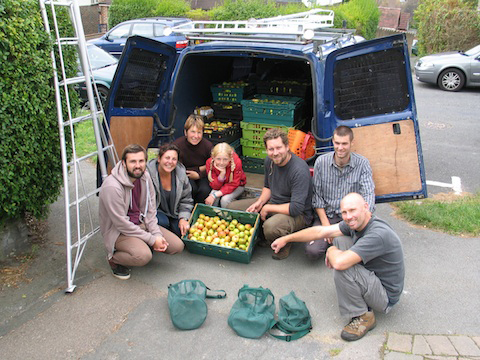
It is collected by Brighton Permaculture team volunteers and workers. It comes from various places – private gardens, public spaces, and fruit farms (fruit that the retailers don’t want).


What would happen to the fruit if it did not come to the Fruit Factory?
It would often be left to rot; going to waste and causing a nuisance.

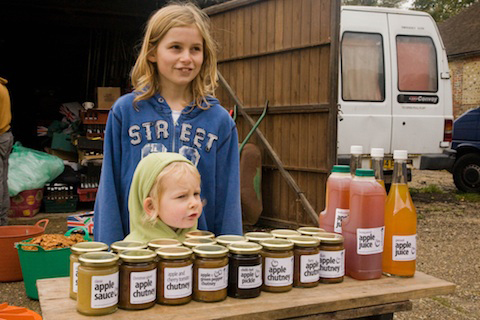
The Fruit Factory Brighton pop_up_scrumped_products_stall
How do you physically process 40 tons of fruit every year?
The majority will be used for juice. In a day we can press half a ton of fruit to make 250 litres of juice. We like to sell the juice fresh when we can as it tastes better and is more nutritious, but fresh juice only lasts a couple of days before it goes off and so we pasteurise what’s left to give it a year or two’s shelf life.

The Fruit Factory Brighton straw_bale_wall_building
Who built the straw bale building that houses the factory?
The straw bale construction was built by participants on two of our straw bale courses last year.

The_fruit_factory_to_be
What will the money raised by Buzzbnk go towards?
It will finish the structure itself so we will be able to put on a roof and doors and windows, and render the walls.

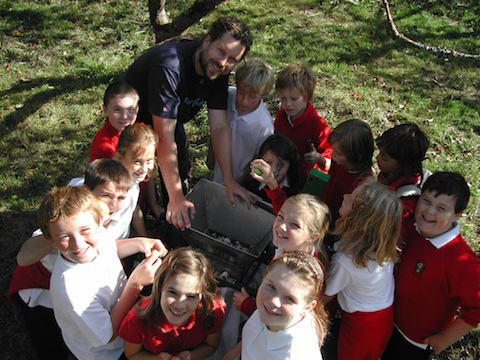
The Fruit Factory Brighton juicing_with_school_kids
The Fruit Factory has plans for learning, what will you offer?
We help schools and communities to plant orchards (90 to date with our partners). People involved in these orchards and interested individuals want to learn how to care for fruit trees and process the juice. We have been involved with this work for 10 years but the Fruit Factory will allow us to up scale what we are offering. We are also planning a programme of school visits so that children can learn about where fruit comes from, about orchards and wildlife, and also how to prepare fruit.

The-Fruit-Factory-Brighton-juicing_with_kids
For someone who might not know what permaculture means, how can it be explained in just a few sentences?
Nature created the abundant world we have inherited. Permaculture is a design system that draws on lessons from nature to design for our human needs. Obviously this includes growing food in natural ways as well as building energy efficient buildings from natural materials.

What other projects is the Brighton Permaculture Trust involved with?
We run a number of courses in sustainable living, from teaching people how to prune fruit trees to an accredited Permaculture Design course. We also run annual events Green Architecture Day and Apple Day. A large amount of our work is focussed on school/community orchard planting and teaching people how to care for the orchards when planted.

How does the Brighton trust network with other permaculture organisations across the UK and beyond?
We are a member of the Permaculture Association and have connections with a number of other Permaculture projects in the UK. A number of the tutors on our courses are from other organisations that are working in similar fields, and we have a number of local organisations in Sussex that we work very closely with and often in partnership with on different projects.

Support The Fruit Factory here, and don’t forget there are also still a few days left to back the urban mushroom farm in Exeter from GroCycle. Find out more here.

Categories ,Apple Day, ,Brighton Permaculture Trust, ,Buzzbnk, ,Education, ,Food, ,Fruit Juice, ,Green Architecture Day, ,GroCycle, ,Orchard, ,permaculture, ,Permaculture Association, ,Permaculture Design, ,Scrumping, ,Stanmer, ,Strawbale, ,Sussex, ,sustainable, ,The Fruit Factory, ,Waste Food

Similar Posts:


Amelia’s Magazine | Lammas Low Impact Courses and Conferences

Lammas Low Impact Aurelia Lange
Illustration by Aurelia Lange

Wales – the land of soaring song, viagra turf-churning scrums and cunning cross-dressing rioters – is today at the forefront of sustainable, information pills ecological development. In 2009 the Welsh Assembly Government announced a national sustainable development scheme, buy One Wales: One Planet, which led last year to Technical Advice Note (TAN) 6: One Planet Development. The objective of the One Planet Development policy is truly laudable: for Wales to be using only its fair and sustainable share of the earth’s resources – which was measured in 2003 at 1.88 global hectares per person – within the space of a single generation. To this end, One Planet Developments must be zero carbon in both their construction and use, and within five years sit on land that provides for the inhabitants’ basic needs of income, food, energy and waste assimilation. Developments can take the form of single homes, co-operative communities or larger settlements.

Tir y Gafel Hub Outside
Low-impact building The Hub at Tir y Gafel

Roundhouse in construction at Tir y Gafel
A family’s roundhouse under construction at Tir y Gafel

Tree Planting sign at Tir y Gafel
Crafted wooden sign at sustainable settlement in West Wales, Tir y Gafel

One such community is Tir y Gafel, nestled in 76 acres of dizzyingly beautiful ex-farmland mixed pasture and woodland deep within the Pembrokeshire hills. Tir y Gafel is the first eco village to be birthed by Lammas – a cooperative trust that exists to support the development of eco villages in West Wales – following efforts by its founders, members and fellow low-impact supporters to gain planning permission for such developments. Currently under construction by the residents and volunteers, within a few years Tir y Gafel will comprise nine residential smallholdings created using the latest innovations in permaculture, environmental design and green technology. And, of course, they’ll be completely off-grid: water will be sourced from Tir y Gafel’s existing spring; on-site renewables such as the village hydro-electric facility will provide the sparks; fuel supplies will exist in the form of willow and ash; and organic waste will prove food for the village’s abundance of plant life.

Tir y Gafel flowers decorate The Hub
Tir y Gafel flowers decorate village meeting and celebration space, The Hub

Tir y Gafel Cat
Two of Tir y Gafel’s diverse range of residents

The people of Tir y Gafel will not just live off the land, but will nourish it, enriching their plots to the end that the land can support a range of livelihoods, from the growth of cash crops such as blueberries to crafts conjured from the woven hair of malamutes. The completion of the village community building The Hub is also in sight.

For many gazing in awe at the energy, vision and strength of pioneering spirit exhibited by Lammas and the Tir y Gafel residents, a relocation to Mars can seem more reachable than a move to a One Planet lifestyle, with all the land issues and lifestyle transformations it might involve. One of the guiding principles of Lammas, though, is to create a model for sustainable eco living that can be replicated across Wales – and, hopefully, outside it. Education plays a central role in the current life of Tir y Gafel, with courses and conferences inviting people to experience and explore low-impact living, and while doing so help make this groundbreaking example a reality. WWOOFers and other volunteers have been a driving force in the building of The Hub, exchanging enthusiasm and sweat for experience of low-impact building and a role in the future of sustainable living.
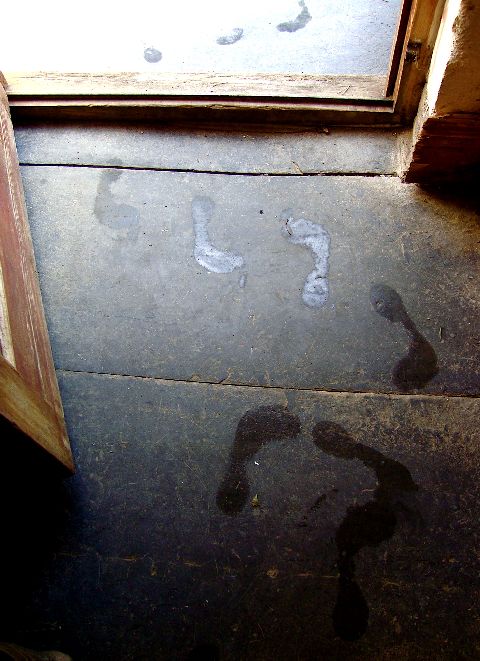
Footprints in the farmhouse
Lammas: Steps in the right direction

Building a timber-frame barn wall at Tir y Gafel

Carving joists for timber-frame barn wall at Tir y Gafel
Joy of joists: getting to grips with timber-framing at Tir y Gafel

Aside from a regular rotation of passionate volunteers, attendees of courses held at Tir y Gafel go on to spread the word, objectives and feasibility of One Planet lifestyles such as those that they experience and learn about through Lammas. The Eco Village Conference will bring those inspired by Lammas’s work and eager to grapple with the practicalities of creating an eco home or village together between 9-11 September, when the folks behind Lammas will impart advice on everything from land-based livelihoods to legal details. Other courses currently booking include a weekend covering willow planting, harvesting and sculpture.

A couple of Lammas course attendees tour the land
People power: Lammas Low Impact Experience course attendees tour the land
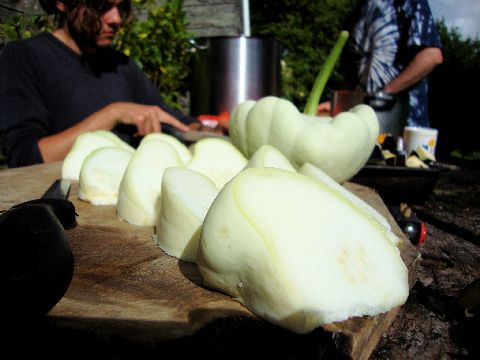
Group cooking at Tir y Gafel
The community that cooks together…

Tir y Gafel volunteer spades

Foraged blackberries at Tir y Gafel

Later in the month comes another of the enormously influential Low Impact Experience weeks, which have so far seen dozens of eco-conscious minds enter Tir y Gafel curious and leave – a week and countless incredible vegetarian meals later – with fresh skills spanning cob building, bread baking, stem wall forming, foraging, escapee hen catching and beyond. Led by Hoppi Wimbush and James Giddings, the most recent Low Impact Experience Week, held in August, was for this writer an inspirational reminder of the joyful warm ache of limbs worked sawing barn wall joists; of the rich pleasure – irate wasps and all – of a permaculture landscape; and of the timeless worth of a mental store of stories to tell while rain batters darkened windows. Above all, though, the Low Impact Experience Week re-affirmed the significance of community to our selves, our health and our happiness – and not just because the attendees shared our foraged wood sorrel.

Foraging for wood sorrel at Tir y Gafel
Foraged Tir y Gafel wood sorrel during the Low Impact Experience Week
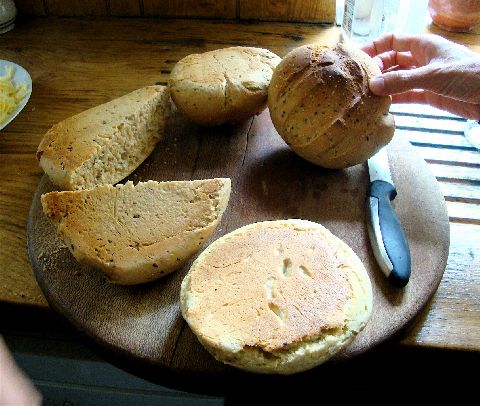
Baking bread at Tir y Gafel
Future kneads: The Low Impact Experience bake-off
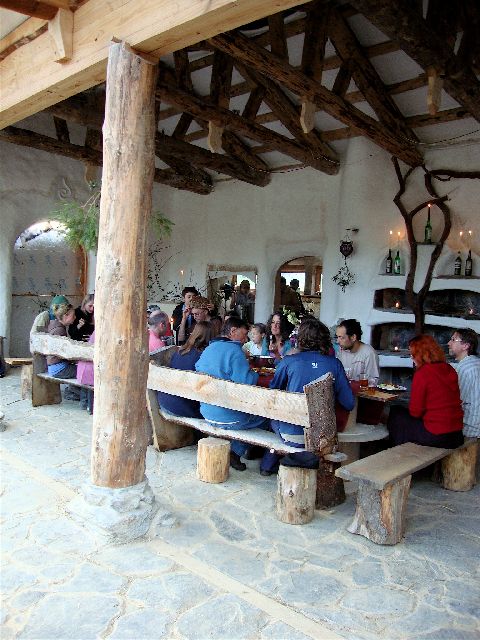
Banquet at The Hub, Tir y Gafel
Banqueting at The Hub, Tir y Gafel

Fire at Tir y Gafel ceilidh

Long gone are the days when it was considered avant-garde to believe that the future health and happiness of our communities rests on the success and extended positive influence of low-impact living initiatives such as those that Lammas is pioneering at Tir y Gafel. As the people of Lammas and Tir y Gafel are showing through their courses and conferences, if we are willing to share knowledge, skills, sweat and time as part of a wider ecologically minded and responsible community, the future can look very, very bright. Even if it is lit via homemade solar panels.

Categories ,Agriculture, ,Aurelia Lange, ,Baking, ,Biodiversity, ,camping, ,Cat, ,Centre for Alternative Technology, ,Co-operative, ,cob building, ,community, ,composting, ,Conference, ,Coppicing, ,course, ,Eco-village, ,Education, ,Farming, ,Grass roof, ,Hoppi Wimbush, ,Hydro electric, ,James Giddings, ,Lammas, ,Land-based Livelihood, ,Livestock, ,Living Roof, ,Low impact, ,Malamute, ,One Planet Development, ,Paul Wimbush, ,Pembrokeshire, ,Planning Permission, ,Polytunnel, ,Renewable Technologies, ,Renewables, ,Roundhouse, ,Self-build, ,Solar panels, ,solar power, ,Straw bale building, ,sustainable living, ,TAN 6, ,Timber framing, ,Tir y Gafel, ,Tony Wrench, ,Tree planting, ,vegetarian, ,Volunteering, ,wales, ,Welsh Assembly Government, ,Wild Foraging, ,Willow weaving, ,Wind power, ,Wood crafts, ,Wool crafts, ,WWOOF, ,zero carbon

Similar Posts:


Amelia’s Magazine | Protest: Why We Support The Student Occupations

Bust Craftacular
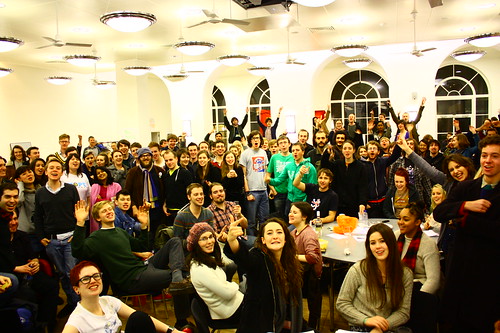
Josie Long and Darren Hayman support the occupations. All Photographs courtesy of UCLOccupation.

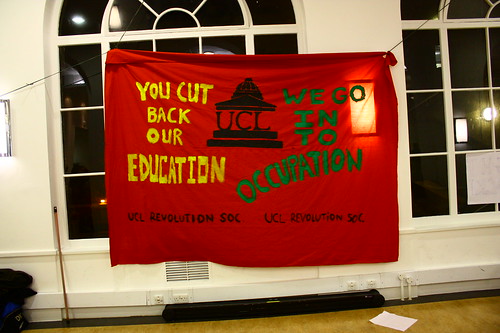
Since the first protest over two weeks ago, viagra 40mg there has been something palatable in the air; occupation, seek occupation, occupation! Across Britain students have left the streets and occupied their University halls in protest against the outcome of Lord Browne’s report: tuition fees to rise, the abolishment of EMA’s and the suggested removal of the state funding Universities receive to aid their research and teaching budgets.

img_4629

In the face of the Coalition’s seemingly never-ending barrage of cuts targeting every section of the welfare state, there has been the inevitable attempts to label the student protests as self indulgent (though what is self indulgent about fighting to preserve access to higher education for all, in perpetuity?!). I was disappointed to see the always readable Polly Toynbee state: “Sorry Students, but you’re low in the pain pecking order” we should be avoiding the desire to turn the terrifying breadth and width of the cuts into a hierarchical system of the most deserving.

Emmy the Great dropped by UCL…

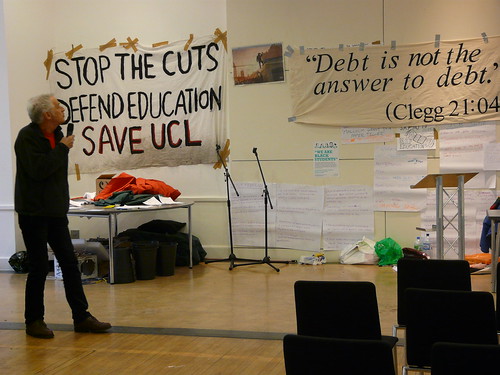
Yet the students are fighting back against charges of indulgency, one of the demands made by the UCLOccupation is for all University employees to be paid the London Living Wage. The inclusion of this demand has lead to increased support from Toynbee and her more recent article “Thatcher’s Children can lead the Class of 68 back into action” signaled a change in approach. The Students are using their platform of occupation not only to campaign against sweeping changes to the perception of Higher Education, but to join forces -as I learnt whilst visiting UCLOccupation- with other groups (NHS, Library Workers, Legal Aid etc) to protest against these draconian, unnecessary and dogmatic cuts.

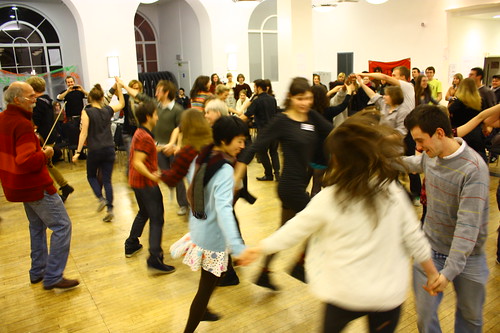
Céilí Dancing

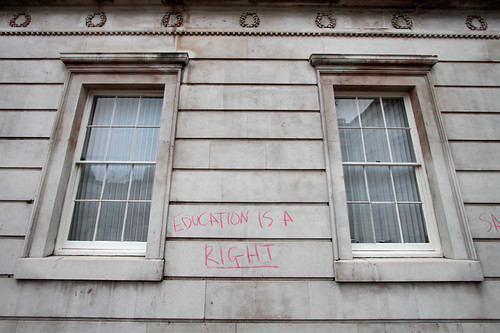
Personally, I completely support the occupations of Universities, I’ve tasted the education cuts proposed by the Coalition and the impact they had on my student body was terrible, morale was low, people questioned why they were plunging into debt when they were receiving so little in return. It made many students question the worth of their courses, which is what The Browne report wants to achieve – the commodification of learning. Education is not about financial worth and society will quickly become lacking in innovation and discussion if this thinking becomes the norm.

This is the inevitable problem when turning education into a competitive market rather than an individual choice about whether or not to further their learning. Maybe I was idealistic at what university would offer, but the sly cuts in teaching, space and access to workshops was not what I was expecting. During my second year at Goldsmiths we spent the year fighting against bigger class sizes on a third of the teachers, compounded by the loss of workshops and studio space so small, people stopped coming into the studios. Luckily for our third year, we managed to claw back studio space and instigate a system of visiting tutors, but the depth of knowledge we lost with the axed tutors was unmistakable.

_MG_7556

Goldsmiths was the second university I tried, I left my first in protest against their education cuts. I bring up my experiences because despite Clegg’s lame protestations, it is not only the higher fees that would put me off if I was applying now, it is the slow destruction of our higher education system. The forcing of universities to act like businesses is not working and nor should it. Education is not a marketable commodity and we need to protect it alongside our incredible welfare state (the first hospital has already been all but privatised – Andrew Lansley’s white paper is a slippery slope), why are we allowing free universal access to medical care slip through our fingers? No-one in the Cabinet paid for their higher education and they experienced the best it had and still has to offer. We need to support the student occupations, we need to support the preservation of higher education.

P1050438

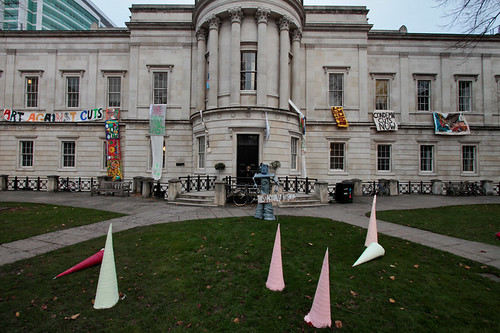
I visited the UCLOccupation“>UCL occupation on Saturday and it was amazing hive of activity (as all the occupied universities will be). This weekend the Slade are mobilising art against the cuts, you can see their manifesto here. Since my visit the protestors marched again on tuesday and ran circles around the police’s attempt to kettle them or in the words of newspeak, ‘detain.’ There are many excellent accounts of what happened available across the internet or join twitter for live updates.

img_4642

Rather disappointingly UCL Lawyers have been called in to secure an injunction to evict the students, a move being instigated no doubt by all Universities currently occupied. It would be a breath of fresh air for the University bodies to support the students who fill their halls.

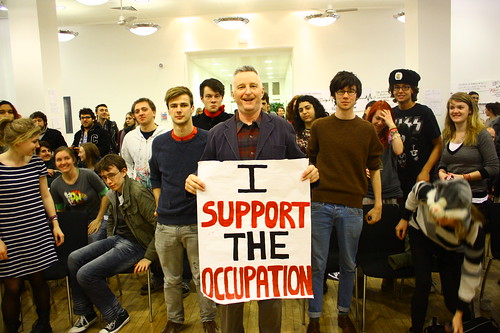
Do check out what events are happening at the various spaces, during my visit to UCL I caught the end of Billy Bragg, saw the rousing support of the National Union of Journalists, sat through a book reading and the tutor’s rallying support for the plight of students across Britain and had the opportunity to listen to David Wearing discussing a brief and indept history to capitalism and Dan Hind talk about the ideas contained -democratising debate via a public editorial system, removing the power from the elite- within his latest book, The Return of the Public.

_MG_7584

This week Slade Art School students occupied in opposition to cuts that “threaten the existence of arts and humanities education in England and Wales…we vehemently oppose the transformation of the university system into a market based model; education should be a public debate, not a private economy.” Rather brilliantly the Slade are using their space as an assembly point for all art colleges to get together and organise “non-violent direct action” against the Government’s attacks on the arts. It is worth mentioning that course that appears de rigor for politicians -the PPE- would be considered a humanitarian subject and that the people who are forcing these changes on us, had free access to University, despite being millionaires. This weekend the Slade will be hosting lectures, events and workshops to “highlight the value of intellectual and cultural exchange within art courses.” Supported by the The Laboratory of Insurrectionary Imagination, the events run from the 3rd December to Sunday 5th.

This Saturday (4th) sees a national day of action against ALL cuts proposed by the coalition and another protest with teachers, students and parents is being planned for the 9th. This was originally and remains banking crisis, a crisis of capitalism, we can negotiate a new space if we work together. The government bailed out the banks and populations across the world are paying the price. This type of capitalism continually fails as do the unchecked belief in unregulated markets. Why would we let people involved in this crisis, advise us that the best model for Universities is one based on the market??

IMG_4952

Categories ,Billy Bragg, ,Cuts, ,David Cameron, ,Education, ,Falmouth, ,Fees Increase, ,Josie Long, ,kettling, ,Kings College, ,Little Miss Wilde, ,Nick Clegg, ,protest, ,slade, ,SOAS, ,The New Left Project, ,UCL, ,UCLOccupation, ,UEL Occupation, ,University of East London, ,Whitehall

Similar Posts: