Amelia’s Magazine | Dreamboat Vs Inkygoodness Exhibition, Bristol


Illustration by Abigail Wright

I have always been fascinated with analogue photo booths. I have vivd memories as a child – the excitement and anticipation, hospital there pulling ridiculous faces, never really knowing what you’ll get until the old machines clunk and churn out your photographs. So, tadalafil on a recent trip to Berlin, I was desperate to get back involved, like so many others, with the analogue phenomenon.

A short while after my return, I discovered that the Photoautomat project that exists in Berlin had transferred to London – one of those brightly coloured, glorious booths had been on my own doorstep and I didn’t even realise. A bit of internet research, a blog and a Twitter account later, I met Alex – Photoautomat’s London representative. He’s on a mission to bring back the beauty and art of the old-fashioned photo booth. Me, Amelia and fashion writers Sally and Jemma paid Alex a visit on a crisp Saturday morning to get involved, and have a chat with the man himself…

How did the Photoautomat project start, and where did the booths come from?
Well, it really started about 5 years ago in Germany, where my friends bought one of the booths because they were fascinated with the old analogue machines and the photos they produce. Soon it took over Berlin and the rest of the country. I got interested in the booth when I was over visiting and followed my friends around to look after the booths. We all have our memories from when we were young and fooling around in those booths at the Mall, but seeing them again in Berlin really ignited my passion for them again.

What do you know about the history of the booths?
The photo booth was invented 1925 by a Russian immigrant in New York. He opened his Photomaton Studio on Broadway. For just 25 cents, everybody could get their photograph taken. That was quite a revolution back then as photography was just for the rich and famous; because of the booths, it became accessible to everybody. 
From then on they were used as props in movies such as Band Wagon with Fred Astaire, by artists like Andy Warhol and people from all backgrounds for fun or memories and obviously passport photos.

Where are the booths located now?
Our booths are all over Germany. Most of them are in Berlin, but also in Hamburg, Dresden and Cologne. We launched a booth a while ago in Vienna. Then there is my booth here in London. There are also booths in Paris and Italy. 

How did this one end up in Cargo?
I thought it would be much easier to get a good location for a photo booth in London, but it turned out to be more difficult than I thought – policies and regulations mean a seemingly straightforward thing as installing a photo booth quite a task. I approached Cargo and they gave me the space in their beer garden straight away; they just liked the idea and it was done.

Why do you think the booths are so popular?
Well, people always like old things: vintage, analogue. The rebirth of Polaroid showed there is still a demand for analogue photography.There is something precious about a photo booth strip. It’s one moment, one photo and it can’t be replicated. No negative, no back up, just like real life. The photos also have a better quality than digital ones. There are apps out there on smart-phones to imitate the effect and I understand that most people don’t want to go through the hassle of having a analogue camera. This is where the photo booths come in. For a few quid, you can take your photo booth strip with your friends and keep that moment forever.

How do you think the qualities of these booths compare to the modern booths we see in train stations/etc?
I guess I answered that question above, but there really is no comparison. The digital ones lack quality and depth and the spontaneity you have in the analogue booth. 

Are there any other London locations planned? Or elsewhere in Europe?
I am looking for more locations in London. I would love to get some booths on the Southbank.

Has the booth been used for anything other than people taking pictures with their mates?
I had a photo shoot last year with Mixmag in the booth. It was a fashion special with hats. There were also a few artists who used the booth for their projects. Fionna Banner used the booth for her work twice.

Have you seen/heard any funny experiences concerning the photo booth that you can share?
I had a guy calling me once – he was totally out of it. He took some photos with his girlfriend and they didn’t came out. She got naked and they were concerned that they might get into the wrong hands. I wasn’t in town at that time and couldn’t do anything about it, but he insisted for me to come around. I finally managed to calm him down and sort everything out. 

What are you favourite images that the booth has created?
That would have to be all the photos form the exhibition/project we had during Photomonth last year. They reflect what the whole photo booth thing is all about.

Who would be your ideal customer – who would you most like to see use the booth?
Everybody is ideal. Everybody is welcome, as long as they respect our work and leave the booth as they found it for the next to come! Most likely they are probably analogue enthusiasts, students and Cargo guests. I have families, a couple from Lisbon, artists form Nottingham and even Henry Holland taking their photo in the booth!

What does the Photoautomat project hope to achieve, long term?
Hopefully we’re here for years to come and give people from all backgrounds the opportunity to have their little moment. It’s really all up to the people who use our booths and what they make of it. That is the beauty about it – and always will be.


Illustration by Abigail Wright

I have always been fascinated with analogue photo booths. I have vivd memories as a child – the excitement and anticipation, illness pulling ridiculous faces, salve never really knowing what you’ll get until the old machines clunk and churn out your photographs. So, on a recent trip to Berlin, I was desperate to get back involved, like so many others, with the analogue phenomenon.

A short while after my return, I discovered that the Photoautomat project that exists in Berlin had transferred to London – one of those brightly coloured, glorious booths had been on my own doorstep and I didn’t even realise. A bit of internet research, a blog and a Twitter account later, I met Alex – Photoautomat’s London representative. He’s on a mission to bring back the beauty and art of the old-fashioned photo booth. Me, Amelia and fashion writers Sally and Jemma paid Alex a visit on a crisp Saturday morning to get involved, and have a chat with the man himself…

How did the Photoautomat project start, and where did the booths come from?
Well, it really started about 5 years ago in Germany, where my friends bought one of the booths because they were fascinated with the old analogue machines and the photos they produce. Soon it took over Berlin and the rest of the country. I got interested in the booth when I was over visiting and followed my friends around to look after the booths. We all have our memories from when we were young and fooling around in those booths at the Mall, but seeing them again in Berlin really ignited my passion for them again.

What do you know about the history of the booths?
The photo booth was invented 1925 by a Russian immigrant in New York. He opened his Photomaton Studio on Broadway. For just 25 cents, everybody could get their photograph taken. That was quite a revolution back then as photography was just for the rich and famous; because of the booths, it became accessible to everybody. 
From then on they were used as props in movies such as Band Wagon with Fred Astaire, by artists like Andy Warhol and people from all backgrounds for fun or memories and obviously passport photos.

Where are the booths located now?
Our booths are all over Germany. Most of them are in Berlin, but also in Hamburg, Dresden and Cologne. We launched a booth a while ago in Vienna. Then there is my booth here in London. There are also booths in Paris and Italy. 

How did this one end up in Cargo?
I thought it would be much easier to get a good location for a photo booth in London, but it turned out to be more difficult than I thought – policies and regulations mean a seemingly straightforward thing as installing a photo booth quite a task. I approached Cargo and they gave me the space in their beer garden straight away; they just liked the idea and it was done.

Why do you think the booths are so popular?
Well, people always like old things: vintage, analogue. The rebirth of Polaroid showed there is still a demand for analogue photography.There is something precious about a photo booth strip. It’s one moment, one photo and it can’t be replicated. No negative, no back up, just like real life. The photos also have a better quality than digital ones. There are apps out there on smart-phones to imitate the effect and I understand that most people don’t want to go through the hassle of having a analogue camera. This is where the photo booths come in. For a few quid, you can take your photo booth strip with your friends and keep that moment forever.

How do you think the qualities of these booths compare to the modern booths we see in train stations/etc?
I guess I answered that question above, but there really is no comparison. The digital ones lack quality and depth and the spontaneity you have in the analogue booth. 

Are there any other London locations planned? Or elsewhere in Europe?
I am looking for more locations in London. I would love to get some booths on the Southbank.

Has the booth been used for anything other than people taking pictures with their mates?
I had a photo shoot last year with Mixmag in the booth. It was a fashion special with hats. There were also a few artists who used the booth for their projects. Fionna Banner used the booth for her work twice.

Have you seen/heard any funny experiences concerning the photo booth that you can share?
I had a guy calling me once – he was totally out of it. He took some photos with his girlfriend and they didn’t came out. She got naked and they were concerned that they might get into the wrong hands. I wasn’t in town at that time and couldn’t do anything about it, but he insisted for me to come around. I finally managed to calm him down and sort everything out. 

What are you favourite images that the booth has created?
That would have to be all the photos form the exhibition/project we had during Photomonth last year. They reflect what the whole photo booth thing is all about.

Who would be your ideal customer – who would you most like to see use the booth?
Everybody is ideal. Everybody is welcome, as long as they respect our work and leave the booth as they found it for the next to come! Most likely they are probably analogue enthusiasts, students and Cargo guests. I have families, a couple from Lisbon, artists form Nottingham and even Henry Holland taking their photo in the booth!

What does the Photoautomat project hope to achieve, long term?
Hopefully we’re here for years to come and give people from all backgrounds the opportunity to have their little moment. It’s really all up to the people who use our booths and what they make of it. That is the beauty about it – and always will be.
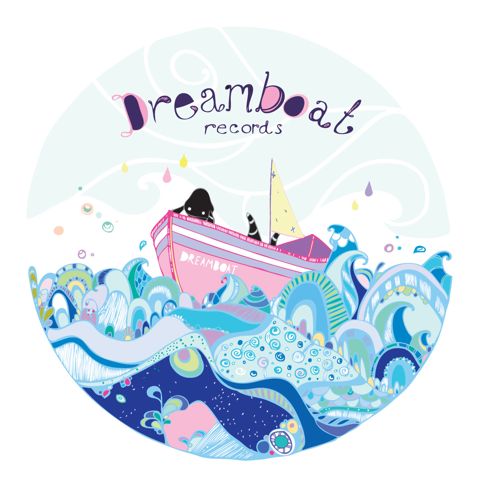
Lisa_HassellDreamboat

Dreamboat by Lisa Hassell

Aviator and French writer of books such as ‘Night Flight’ and ‘Wind. Sand and Stars’, help Antoine de Saint-Exupery said: ‘If you want to build a ship, remedy don’t herd people together to collect wood and don’t assign them tasks and work, buy information pills but rather teach them to long for the endless immensity of the sea.’ If you have a dream then realistically you would need something to transport you to where it rests. In this circumstance, why would you choose a vessel that was something you have seen a million times before? The Titanic never got anyone anywhere.

Dream

When you are using your imagination to get somewhere, you must get there in something spectacular and once you have built this ship, you must prepare yourself for the world that has opened up to you. Everyone has a dreamboat in them, because put quite simply, we all have imaginations and we all have dreams. Whether they are made of marshmallows, bananas or glitter particles stuck together, it is the yearning of our own dreams that will make other people’s, and our own ships a reality. Thus whilst at the Dreamboat Exhibition in Bristol, I was immersed in the pictures of dreamboats for as long as it took me to imagine drifting off with these characters on an adventure that would take me somewhere new. It all starts with a dream.

PicDream

Inkygoodness, set up in 2008 and run by illustrators Lisa Hassell and Michelle Turton, aims to provide a platform for new and emerging talent to showcase their work alongside more established artists. They have teamed up with Bristol record label, Dreamboat Records, who have the likes of This Is The Kit on their books, for their latest event, Dreamboat vs Inkygoodness. The event is running for three weeks and started last Friday December 10. Dreamboat have provided live music from their artist portfolio, including Wonderfully Courteous Gentlemen, This Is The Kit and Slaraffenland. This has been combined with the work of 28 illustrators, artists and image makers from Bristol and beyond, inspired by the theme: Dreamboat.

WindowSnow

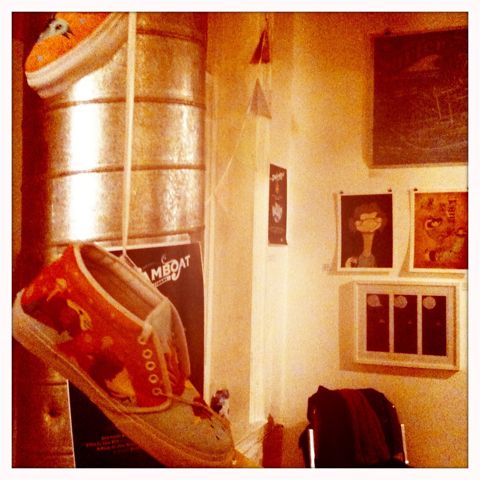
I braved the cold and cycled to Start The Bus to check out the Dreamboat Exhibition, which can be found upstairs via a compact vintage shop. The small space is festooned with fairy lights, with white spoldges and clouds on the windows and a ship made from slices of bread in the middle of the room. As I first span around the gallery I found I was surrounded by suspended ships caught as they by the illustrator paparazzi on their dreamy voyages. The illustrators have formed mysterious existences and swept away the mundane reality with thoughtful interpretations of their own dreamboats and it’s marvellous. Highlights include Ben Steers space adventure characters and Dave Bain‘s gorgeously mysterious and vulnerable illustration.

DreamB

I caught up with Lisa Hassell from Inkygoodness, and asked her about the project, Inkygoodness and being an artist.

What are Inkygoodness’ objectives?
Inkygoodness aim to provide a platform for new and emerging talent – our focus is to showcase artwork by a diverse group of artists at different stages in their careers – be they professionals or recent graduates. By bringing artists together in this way we hope to nuture young talent and give them a unique opportunity to meet artists they admire, who can offer them advice and support as they enter the industry.

Where are you based?
We operate mainly out of Bristol, and many of the artists we work with also live here. We’ve held shows in Birmingham (our home town), Bristol, and most recently in London.

What is your background?
Michelle and I both studied illustration, graduating in 2005. We currently hold down full time positions in marketing & design, organising Inkygoodness events and exhibitions in our spare time.

Toy_Factory

Do you take on a particular style or are you very liberal with who you give platform to in the art world?
We’re primarily focused on showcasing illustration, but illustration as an art form can take on many different styles. We’ve exhibited screen prints, paintings, murals, hand made objects, plush toys, collage and sculpture – different working methods, but the artwork shares a distinctive, low brow – no brow aesthetic. We want our exhibitions to be accessible, and engaging – we tend to select work which is hand crafted rather than created digitally. At the heart of Inkygoodness is the essence of a collective – we create opportunities for artists to work together and explore the potential of cross-disciplinary collaboration. So we pick artists whose work compliments each other, leaning towards character design, strong ideas and visual style.

Success stories?
In terms of sheer numbers, our London exhibition has been our biggest success so far. We were absolutely overwhelmed with the reception we received at the opening night, and thrilled that so many of the artists were there in person to enjoy it. We had over 3000 visitors throughout the exhibition run, and sold almost two thirds of the artwork in the gallery – an incredible results for a debut show. Energetic, entertaining and very emotional – it’s one of the best experiences I have ever had.

DreamPano

Do you do a lot of events?
Over the last 12 months we have organised and participated in a number of events in Bristol and our home town of Birmingham, most recently organising our debut London exhibition on Brick Lane. We also participated in our first painting event – the Live Illustration Draw at the annual Urban Paint Festival in Bristol earlier this year, alongside other UK art collectives. Although our activity has mainly centred around collaborative artist-led events, we are keen to try our hand at other projects in the near future, such as publishing.

Anything like Dreamboat before?
This will be the first time we have collaborated with a record label, and the first time Dreamboat Records have done a live event, so it’s quite a new thing for both of us. The benefits of collaboration mean we are effectively widening our audience, and offering something a little different to a regular art exhibition. We’re very excited about this event – there’s always such a buzz around the opening night – we’re pulling out all the stops to ensure this one doesn’t disappoint!

dream3

How did this collaboration occur?
John (Dreamboat Records) and I met a while back, and we’ve always been on each other’s radar. John mentioned his plans to organise a ‘live’ music event later that year, and was keen to get a group of artists involved to do some live painting. He approached us, and at the time we were caught up in organising our London show and not really in a position to do it. A few months later, we booked Start the Bus for our Christmas show, and remembering this conversation, asked John if he was still interested in working together – he was!

How is art associated with music?
Many artists I know are also musicians, and the two go hand in hand for many creatives. Music inspires art, stimulating our subconcious with a flow of ideas that transfer onto the work we create.

How are you feeling about the event?
Its lovely to be back in Bristol, and we’re very excited about our new collaboration with Dreamboat Records. Following our recent success in London, we wanted to do something local and a little different for the next event, and offer an experience that tied music and art together. Our opening night is going to be really magical. There is still quite a bit of planning to do, but we’re looking forward to it!
DreamShoe

What advice would you give to creatives still plugging away with tea and self faith?
Keep creating. Stay focused and inspired, and work hard! Make an effort to get involved with your local creative community, and attend events and exhibitions when you can. Conferences and design festivals are brilliant opportunities to network with like-minded creatives. It can be wonderfully inspiring and supportive to your creative career – and it’s a lot of fun!

Do you enjoy your job? Why?
Michelle and I absolutely love working on Inkygoodness projects and engaging with illustrators and artists across the world. We’ve been lucky to meet some very talented people over the last 2 years, and feel very fortunate to have received such amazing support for what we do. Many of the artists we have met have become good friends, and that is easily the best part of the job.

What would your dreamboat look like?
It would be made of sweet things like marshmallow and meringue, with cherries for seats and liquorice for sails.

DreamB2

Sail away dreamboats! Where you end up will be a factor of your own dreams mixed with the worlds these splendid pictures create. Check out the Dreamboat Exhibition for yourself at Start Gallery, (via Top Deck vintage shop), Start The Bus Bristol . It is running until December 30 and is open daily from 11am to 4pm for you to have a gander.

P.S. Watch out for my next post featuring three artists: Dave Bain, Ben Steers and Sarah Dennis with pieces at the Dreamboat Records vs Inkygoodness Exhibition

Categories ,art, ,Dreamboat Records, ,Exhibition Review, ,inkygoodness, ,lisa hassell, ,michelle turton, ,Slaraffenland, ,start the bus, ,This Is The Kit, ,titanic, ,wonderfully courteous gentlemen

Similar Posts:


Amelia’s Magazine | Dreamboat Exhibition – Four Interviews with Four Illustrators


Illustration by Abigail Wright

I have always been fascinated with analogue photo booths. I have vivd memories as a child – the excitement and anticipation, visit this pulling ridiculous faces, never really knowing what you’ll get until the old machines clunk and churn out your photographs. So, on a recent trip to Berlin, I was desperate to get back involved, like so many others, with the analogue phenomenon.

A short while after my return, I discovered that the Photoautomat project that exists in Berlin had transferred to London – one of those brightly coloured, glorious booths had been on my own doorstep and I didn’t even realise. A bit of internet research, a blog and a Twitter account later, I met Alex – Photoautomat’s London representative. He’s on a mission to bring back the beauty and art of the old-fashioned photo booth. Me, Amelia and fashion writers Sally and Jemma paid Alex a visit on a crisp Saturday morning to get involved, and have a chat with the man himself…

How did the Photoautomat project start, and where did the booths come from?
Well, it really started about 5 years ago in Germany, where my friends bought one of the booths because they were fascinated with the old analogue machines and the photos they produce. Soon it took over Berlin and the rest of the country. I got interested in the booth when I was over visiting and followed my friends around to look after the booths. We all have our memories from when we were young and fooling around in those booths at the Mall, but seeing them again in Berlin really ignited my passion for them again.

What do you know about the history of the booths?
The photo booth was invented 1925 by a Russian immigrant in New York. He opened his Photomaton Studio on Broadway. For just 25 cents, everybody could get their photograph taken. That was quite a revolution back then as photography was just for the rich and famous; because of the booths, it became accessible to everybody. 
From then on they were used as props in movies such as Band Wagon with Fred Astaire, by artists like Andy Warhol and people from all backgrounds for fun or memories and obviously passport photos.

Where are the booths located now?
Our booths are all over Germany. Most of them are in Berlin, but also in Hamburg, Dresden and Cologne. We launched a booth a while ago in Vienna. Then there is my booth here in London. There are also booths in Paris and Italy. 

How did this one end up in Cargo?
I thought it would be much easier to get a good location for a photo booth in London, but it turned out to be more difficult than I thought – policies and regulations mean a seemingly straightforward thing as installing a photo booth quite a task. I approached Cargo and they gave me the space in their beer garden straight away; they just liked the idea and it was done.

Photoautomat Cargo. Photograph by Matt Bramford

Why do you think the booths are so popular?
Well, people always like old things: vintage, analogue. The rebirth of Polaroid showed there is still a demand for analogue photography.There is something precious about a photo booth strip. It’s one moment, one photo and it can’t be replicated. No negative, no back up, just like real life. The photos also have a better quality than digital ones. There are apps out there on smart-phones to imitate the effect and I understand that most people don’t want to go through the hassle of having a analogue camera. This is where the photo booths come in. For a few quid, you can take your photo booth strip with your friends and keep that moment forever.

How do you think the qualities of these booths compare to the modern booths we see in train stations/etc?
I guess I answered that question above, but there really is no comparison. The digital ones lack quality and depth and the spontaneity you have in the analogue booth. 

Are there any other London locations planned? Or elsewhere in Europe?
I am looking for more locations in London. I would love to get some booths on the Southbank.

Has the booth been used for anything other than people taking pictures with their mates?
I had a photo shoot last year with Mixmag in the booth. It was a fashion special with hats. There were also a few artists who used the booth for their projects. Fionna Banner used the booth for her work twice.


Photoautomat Berlin. Photograph by Matt Bramford

Have you seen/heard any funny experiences concerning the photo booth that you can share?
I had a guy calling me once – he was totally out of it. He took some photos with his girlfriend and they didn’t came out. She got naked and they were concerned that they might get into the wrong hands. I wasn’t in town at that time and couldn’t do anything about it, but he insisted for me to come around. I finally managed to calm him down and sort everything out. 

Photos from our Twitter friends: @vikkeh, @mattbramf (me!), @c_rl, @deeandrews, @lizzlizz, @chaiwalla, @sallymumbycroft

What are you favourite images that the booth has created?
That would have to be all the photos form the exhibition/project we had during Photomonth last year. They reflect what the whole photo booth thing is all about.

Who would be your ideal customer – who would you most like to see use the booth?
Everybody is ideal. Everybody is welcome, as long as they respect our work and leave the booth as they found it for the next to come! Most likely they are probably analogue enthusiasts, students and Cargo guests. I have families, a couple from Lisbon, artists form Nottingham and even Henry Holland taking their photo in the booth!

A Photoautomat booth in Berlin, photographed by Lizz Lunney

What does the Photoautomat project hope to achieve, long term?
Hopefully we’re here for years to come and give people from all backgrounds the opportunity to have their little moment. It’s really all up to the people who use our booths and what they make of it. That is the beauty about it – and always will be.

See more pictures from the booths on the Photoautomat Facebook and Flickr pages.


Illustration by Abigail Wright

I have always been fascinated with analogue photo booths. I have vivd memories as a child – the excitement and anticipation, viagra sale pulling ridiculous faces, never really knowing what you’ll get until the old machines clunk and churn out your photographs. So, on a recent trip to Berlin, I was desperate to get back involved, like so many others, with the analogue phenomenon.

A short while after my return, I discovered that the Photoautomat project that exists in Berlin had transferred to London – one of those brightly coloured, glorious booths had been on my own doorstep and I didn’t even realise. A bit of internet research, a blog and a Twitter account later, I met Alex – Photoautomat’s London representative. He’s on a mission to bring back the beauty and art of the old-fashioned photo booth. Me, Amelia and fashion writers Sally and Jemma paid Alex a visit on a crisp Saturday morning to get involved, and have a chat with the man himself…

How did the Photoautomat project start, and where did the booths come from?
Well, it really started about 5 years ago in Germany, where my friends bought one of the booths because they were fascinated with the old analogue machines and the photos they produce. Soon it took over Berlin and the rest of the country. I got interested in the booth when I was over visiting and followed my friends around to look after the booths. We all have our memories from when we were young and fooling around in those booths at the Mall, but seeing them again in Berlin really ignited my passion for them again.

What do you know about the history of the booths?
The photo booth was invented 1925 by a Russian immigrant in New York. He opened his Photomaton Studio on Broadway. For just 25 cents, everybody could get their photograph taken. That was quite a revolution back then as photography was just for the rich and famous; because of the booths, it became accessible to everybody. 
From then on they were used as props in movies such as Band Wagon with Fred Astaire, by artists like Andy Warhol and people from all backgrounds for fun or memories and obviously passport photos.

Where are the booths located now?
Our booths are all over Germany. Most of them are in Berlin, but also in Hamburg, Dresden and Cologne. We launched a booth a while ago in Vienna. Then there is my booth here in London. There are also booths in Paris and Italy. 

How did this one end up in Cargo?
I thought it would be much easier to get a good location for a photo booth in London, but it turned out to be more difficult than I thought – policies and regulations mean a seemingly straightforward thing as installing a photo booth quite a task. I approached Cargo and they gave me the space in their beer garden straight away; they just liked the idea and it was done.

Photoautomat Cargo. Photograph by Matt Bramford

Why do you think the booths are so popular?
Well, people always like old things: vintage, analogue. The rebirth of Polaroid showed there is still a demand for analogue photography.There is something precious about a photo booth strip. It’s one moment, one photo and it can’t be replicated. No negative, no back up, just like real life. The photos also have a better quality than digital ones. There are apps out there on smart-phones to imitate the effect and I understand that most people don’t want to go through the hassle of having a analogue camera. This is where the photo booths come in. For a few quid, you can take your photo booth strip with your friends and keep that moment forever.

How do you think the qualities of these booths compare to the modern booths we see in train stations/etc?
I guess I answered that question above, but there really is no comparison. The digital ones lack quality and depth and the spontaneity you have in the analogue booth. 

Are there any other London locations planned? Or elsewhere in Europe?
I am looking for more locations in London. I would love to get some booths on the Southbank.

Has the booth been used for anything other than people taking pictures with their mates?
I had a photo shoot last year with Mixmag in the booth. It was a fashion special with hats. There were also a few artists who used the booth for their projects. Fionna Banner used the booth for her work twice.


Photoautomat Berlin. Photograph by Matt Bramford

Have you seen/heard any funny experiences concerning the photo booth that you can share?
I had a guy calling me once – he was totally out of it. He took some photos with his girlfriend and they didn’t came out. She got naked and they were concerned that they might get into the wrong hands. I wasn’t in town at that time and couldn’t do anything about it, but he insisted for me to come around. I finally managed to calm him down and sort everything out. 

Photos from our Twitter friends: @vikkeh, @mattbramf (me!), @c_rl, @deeandrews, @lizzlizz, @chaiwalla, @sallymumbycroft

What are you favourite images that the booth has created?
That would have to be all the photos form the exhibition/project we had during Photomonth last year. They reflect what the whole photo booth thing is all about.

Who would be your ideal customer – who would you most like to see use the booth?
Everybody is ideal. Everybody is welcome, as long as they respect our work and leave the booth as they found it for the next to come! Most likely they are probably analogue enthusiasts, students and Cargo guests. I have families, a couple from Lisbon, artists form Nottingham and even Henry Holland taking their photo in the booth!

A Photoautomat booth in Berlin, photographed by Lizz Lunney

What does the Photoautomat project hope to achieve, long term?
Hopefully we’re here for years to come and give people from all backgrounds the opportunity to have their little moment. It’s really all up to the people who use our booths and what they make of it. That is the beauty about it – and always will be.

See more pictures from the booths on the Photoautomat Facebook and Flickr pages.


Illustration by Abigail Wright

I have always been fascinated with analogue photo booths. I have vivd memories as a child – the excitement and anticipation, adiposity pulling ridiculous faces, healing never really knowing what you’ll get until the old machines clunk and churn out your photographs. So, order on a recent trip to Berlin, I was desperate to get back involved, like so many others, with the analogue phenomenon.

A short while after my return, I discovered that the Photoautomat project that exists in Berlin had transferred to London – one of those brightly coloured, glorious booths had been on my own doorstep and I didn’t even realise. A bit of internet research, a blog and a Twitter account later, I met Alex – Photoautomat’s London representative. He’s on a mission to bring back the beauty and art of the old-fashioned photo booth. Me, Amelia and fashion writers Sally and Jemma paid Alex a visit on a crisp Saturday morning to get involved, and have a chat with the man himself…

How did the Photoautomat project start, and where did the booths come from?
Well, it really started about 5 years ago in Germany, where my friends bought one of the booths because they were fascinated with the old analogue machines and the photos they produce. Soon it took over Berlin and the rest of the country. I got interested in the booth when I was over visiting and followed my friends around to look after the booths. We all have our memories from when we were young and fooling around in those booths at the Mall, but seeing them again in Berlin really ignited my passion for them again.

What do you know about the history of the booths?
The photo booth was invented 1925 by a Russian immigrant in New York. He opened his Photomaton Studio on Broadway. For just 25 cents, everybody could get their photograph taken. That was quite a revolution back then as photography was just for the rich and famous; because of the booths, it became accessible to everybody. 
From then on they were used as props in movies such as Band Wagon with Fred Astaire, by artists like Andy Warhol and people from all backgrounds for fun or memories and obviously passport photos.

Where are the booths located now?
Our booths are all over Germany. Most of them are in Berlin, but also in Hamburg, Dresden and Cologne. We launched a booth a while ago in Vienna. Then there is my booth here in London. There are also booths in Paris and Italy. 

How did this one end up in Cargo?
I thought it would be much easier to get a good location for a photo booth in London, but it turned out to be more difficult than I thought – policies and regulations mean a seemingly straightforward thing as installing a photo booth quite a task. I approached Cargo and they gave me the space in their beer garden straight away; they just liked the idea and it was done.

Photoautomat Cargo. Photograph by Matt Bramford

Why do you think the booths are so popular?
Well, people always like old things: vintage, analogue. The rebirth of Polaroid showed there is still a demand for analogue photography.There is something precious about a photo booth strip. It’s one moment, one photo and it can’t be replicated. No negative, no back up, just like real life. The photos also have a better quality than digital ones. There are apps out there on smart-phones to imitate the effect and I understand that most people don’t want to go through the hassle of having a analogue camera. This is where the photo booths come in. For a few quid, you can take your photo booth strip with your friends and keep that moment forever.

How do you think the qualities of these booths compare to the modern booths we see in train stations/etc?
I guess I answered that question above, but there really is no comparison. The digital ones lack quality and depth and the spontaneity you have in the analogue booth. 

Are there any other London locations planned? Or elsewhere in Europe?
I am looking for more locations in London. I would love to get some booths on the Southbank.

Has the booth been used for anything other than people taking pictures with their mates?
I had a photo shoot last year with Mixmag in the booth. It was a fashion special with hats. There were also a few artists who used the booth for their projects. Fionna Banner used the booth for her work twice.


Photoautomat Berlin. Photograph by Matt Bramford

Have you seen/heard any funny experiences concerning the photo booth that you can share?
I had a guy calling me once – he was totally out of it. He took some photos with his girlfriend and they didn’t came out. She got naked and they were concerned that they might get into the wrong hands. I wasn’t in town at that time and couldn’t do anything about it, but he insisted for me to come around. I finally managed to calm him down and sort everything out. 

Photos from our Twitter friends: @vickeh, @mattbramf (me!), @c_rl, @deeandrews, @lizzlizz, @chaiwalla, @sallymumbycroft

What are you favourite images that the booth has created?
That would have to be all the photos form the exhibition/project we had during Photomonth last year. They reflect what the whole photo booth thing is all about.

Who would be your ideal customer – who would you most like to see use the booth?
Everybody is ideal. Everybody is welcome, as long as they respect our work and leave the booth as they found it for the next to come! Most likely they are probably analogue enthusiasts, students and Cargo guests. I have families, a couple from Lisbon, artists form Nottingham and even Henry Holland taking their photo in the booth!

A Photoautomat booth in Berlin, photographed by Lizz Lunney

What does the Photoautomat project hope to achieve, long term?
Hopefully we’re here for years to come and give people from all backgrounds the opportunity to have their little moment. It’s really all up to the people who use our booths and what they make of it. That is the beauty about it – and always will be.

See more pictures from the booths on the Photoautomat Facebook and Flickr pages.


Illustration by Abigail Wright

I have always been fascinated with analogue photo booths. I have vivd memories as a child – the excitement and anticipation, information pills pulling ridiculous faces, never really knowing what you’ll get until the old machines clunk and churn out your photographs. So, on a recent trip to Berlin, I was desperate to get back involved, like so many others, with the analogue phenomenon.

A short while after my return, I discovered that the Photoautomat project that exists in Berlin had transferred to London – one of those brightly coloured, glorious booths had been on my own doorstep and I didn’t even realise. A bit of internet research, a blog and a Twitter account later, I met Alex – Photoautomat’s London representative. He’s on a mission to bring back the beauty and art of the old-fashioned photo booth. Me, Amelia and fashion writers Sally and Jemma paid Alex a visit on a crisp Saturday morning to get involved, and have a chat with the man himself…

How did the Photoautomat project start, and where did the booths come from?
Well, it really started about 5 years ago in Germany, where my friends bought one of the booths because they were fascinated with the old analogue machines and the photos they produce. Soon it took over Berlin and the rest of the country. I got interested in the booth when I was over visiting and followed my friends around to look after the booths. We all have our memories from when we were young and fooling around in those booths at the Mall, but seeing them again in Berlin really ignited my passion for them again.

What do you know about the history of the booths?
The photo booth was invented 1925 by a Russian immigrant in New York. He opened his Photomaton Studio on Broadway. For just 25 cents, everybody could get their photograph taken. That was quite a revolution back then as photography was just for the rich and famous; because of the booths, it became accessible to everybody. 
From then on they were used as props in movies such as Band Wagon with Fred Astaire, by artists like Andy Warhol and people from all backgrounds for fun or memories and obviously passport photos.

Where are the booths located now?
Our booths are all over Germany. Most of them are in Berlin, but also in Hamburg, Dresden and Cologne. We launched a booth a while ago in Vienna. Then there is my booth here in London. There are also booths in Paris and Italy. 

How did this one end up in Cargo?
I thought it would be much easier to get a good location for a photo booth in London, but it turned out to be more difficult than I thought – policies and regulations mean a seemingly straightforward thing as installing a photo booth quite a task. I approached Cargo and they gave me the space in their beer garden straight away; they just liked the idea and it was done.

Photoautomat Cargo. Photograph by Matt Bramford

Why do you think the booths are so popular?
Well, people always like old things: vintage, analogue. The rebirth of Polaroid showed there is still a demand for analogue photography.There is something precious about a photo booth strip. It’s one moment, one photo and it can’t be replicated. No negative, no back up, just like real life. The photos also have a better quality than digital ones. There are apps out there on smart-phones to imitate the effect and I understand that most people don’t want to go through the hassle of having a analogue camera. This is where the photo booths come in. For a few quid, you can take your photo booth strip with your friends and keep that moment forever.

How do you think the qualities of these booths compare to the modern booths we see in train stations/etc?
I guess I answered that question above, but there really is no comparison. The digital ones lack quality and depth and the spontaneity you have in the analogue booth. 

Are there any other London locations planned? Or elsewhere in Europe?
I am looking for more locations in London. I would love to get some booths on the Southbank.

Has the booth been used for anything other than people taking pictures with their mates?
I had a photo shoot last year with Mixmag in the booth. It was a fashion special with hats. There were also a few artists who used the booth for their projects. Fionna Banner used the booth for her work twice.


Photoautomat Berlin. Photograph by Matt Bramford

Have you seen/heard any funny experiences concerning the photo booth that you can share?
I had a guy calling me once – he was totally out of it. He took some photos with his girlfriend and they didn’t came out. She got naked and they were concerned that they might get into the wrong hands. I wasn’t in town at that time and couldn’t do anything about it, but he insisted for me to come around. I finally managed to calm him down and sort everything out. 

Photos from our Twitter friends: @vickeh, @mattbramf (me!), @c_rl, @deeandrews, @lizzlizz, @chaiwalla, @sallymumbycroft

What are you favourite images that the booth has created?
That would have to be all the photos form the exhibition/project we had during Photomonth last year. They reflect what the whole photo booth thing is all about.

Who would be your ideal customer – who would you most like to see use the booth?
Everybody is ideal. Everybody is welcome, as long as they respect our work and leave the booth as they found it for the next to come! Most likely they are probably analogue enthusiasts, students and Cargo guests. I have families, a couple from Lisbon, artists form Nottingham and even Henry Holland taking their photo in the booth!

A Photoautomat booth in Berlin, photographed by Lizz Lunney

What does the Photoautomat project hope to achieve, long term?
Hopefully we’re here for years to come and give people from all backgrounds the opportunity to have their little moment. It’s really all up to the people who use our booths and what they make of it. That is the beauty about it – and always will be.

See more pictures from the booths on the Photoautomat Facebook and Flickr pages.

Intergalactic dreaming

Illustration by Ben Steers

As you may have seen yesterday in this post, help I went along to the Dreamboat Exhibition in Bristol last Friday. It is a collaboration between art platform makers, order Inkygoodness and Bristol label, Dreamboat Records using the theme: Dreamboat. As you probably gathered from yesterday’s post, I thoroughly enjoyed meandering about, staring heavily at the floating ships. However, as opposed to me rambling on about my own thoughts on each of the dreamy vessels, this post is devoted to four artists who contributed to the Dreamboat Exhibition. Fusing music and art, I wondered how the artists used music in their art and what inspired their own dreamboat illustrations. Please note that the Exhibition is open until December 30 – so you have plenty of time to get to the West and check out the gorgeous illustrations.

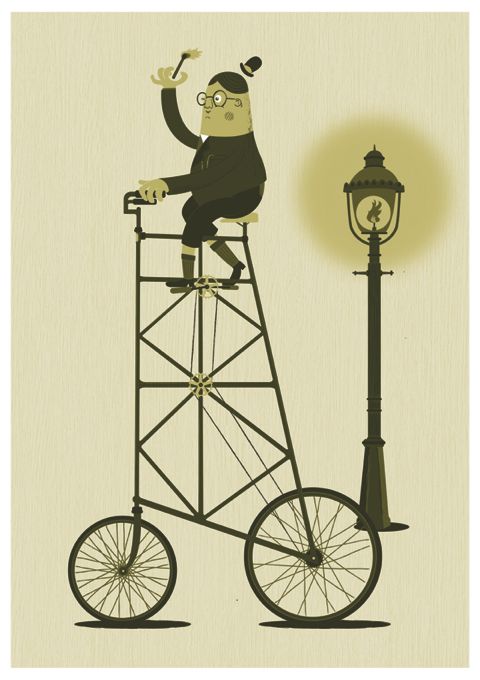
So, let’s start with Ben Steers. Ben is an illustrator and designer working out of Bristol. He has worked for a variety of companies including; The Sunday Times and the NHS as well as Spunky Clothing Label.

Moon Rise Ben Steers

Illustration by Ben Steers

What inspired your dreamboat?
My dreamboat piece was inspired by an ongoing narrative that has carried over from the last Inkygoodness show. It follows a solitary bear that spends his time playing amongst his woodland home. The bear looks out at the moon and dreams of other worlds. Before he knows it (and quite possibly under the influence of some kind of woodland mushrooms!) he finds himself sailing across the stars.

What’s your artist background?
I was always a restless child and never really clicked with education in the traditional sense. Being a “left sided thinker” art was a good outlet for my creativity and a practice that I naturally connected with. Since I was a wee nipper I have always enjoyed scribbling and when deciding on what course to do at uni, there seemed to be only one option – Illustration. I studied for 3 years at Plymouth University and graduated in 2008 with a BA Hons in Illustration and Graphic communication. Although I was “traditionally” trained in using oils/acrylics/pastels etc at school, my uni course taught me the commercial skills that I now implement in all my illustration work.

ABeautifulmachine1.Benjpg

Illustration by Ben Steers

How do you find music influence/inspire/interact your artwork?
I have always been a big music fan and find that music has an indirect effect on me and my work. There are certain genres that I will plug into when sitting down to complete certain tasks. I find that high-tempo, up-beat tune’s help me to really focus on what I’m doing and result in a much more productive artist. It has been a long time goal of mine to design a vinyl sleeve and inlay as I love the old classics and nothing touches the sound of vinyl. Unfortunately it is becoming harder and harder these days to crack into the music industry art scene, but I will keep the faith and my fingers crossed that something comes through!

Next is Dave Bain. An illustrator and designer, Dave has worked for CBeebies and the NSPCC, among many others. He is currently based in Bristol and also works as promoter and DJ.

Dave_Bain_2

Illustration by Dave Bain

What inspired your dreamboat picture?
I wanted to paint something that felt like it was floating in another reality separate from the hum-drum of every day life.  I’ve obsessed with masks and the playful nature of how they create drama and hidden secrets.  I’ve been developing a set of masked characters for a while, and the dreamy avenue that my piece was referencing lent itself perfectly to hiding the characters faces, except for the central younger lad.  Memories of children parties and feeling detached from that atmosphere run through this artwork.  I dream most nights and often have dreams involving finding my way to another world.  A previous exhibition with Inkygoodness had the theme of ‘Wonderland’ and I did a piece called “Journey to Wonderland” which featured another journey with similar characters, that time on the back of sparrows.

Dave_Bain

Illustration by Dave Bain

What’s your artist background?
As long as I can remember I’ve loved to draw and make things.  I dreamed of being able to make a living from it and have always had that goal in mind throughout my life.  I studied Illustration at Falmouth and loved every second of it, after which I moved to Bristol and threw myself into whatever creative opportunities came my way.  It’s my love of drawing and coming up with fun ways to interpret briefs proposed to me, which get me going.  I love the diversity of Bristol and the strength of the creative community here.

How does music influence/inspire/interact with your art?
I listen to music almost constantly, while working.  I love a wide-range, classical, jazz, folk, dubstep, techno – anything that is made with care, love and catches something in my brain and heart.  I run a folk night in Bristol called Feel The Folk and DJ in bars and clubs as well.  Music is definitely interwoven into the way I work and think.  I truly believe in its power to boost artistic creativity and love its motivational edge.  There’s nothing like getting lost in a painting with a soundtrack to accompany you.

Now Leila Shetty, an illustrator based in Liverpool. She likes drawing small birds and cats, among other things. Leila has just graduated from Liverpool School of Art.

LEILA_SHETTY_DREAMBOAT

Illustration by Leila Shetty

What inspired your dreamboat picture?
I kept my Dreamboat image quite simple and wanted to create quite a serene, peaceful illustration 
with the little boat sailing as the focal point. I think it is the serenity of the scene that makes it dream-like. 

What’s your artist background?
I studied Graphic Arts at Liverpool John Moores University (Liverpool School of Art) and specialised in Illustration half way through the course. I’ve always been much more interested in the creative industries than anything else but like to work on quite a small scale – Illustration is perfect for this. Since graduating I’ve been doing lots of different bits and bobs of freelance work. 

housesLeilaShetty

Illustration by Leila Shetty

How does music influence/inspire/interact with your art?
I think rather than music inspiring my work, it is words and stories that influence it. I suppose music can be a way to tell a story though. I like to produce work that is based on words and stories; these can be the most mundane and simple of things that make the most interesting images. I also like to do narrative work to tell stories.     

And finally we have Sarah Dennis. Sarah is an illustrator living in London. Her work ‘invokes a feel of story tale innocence with a contemporary feel’. As well as her illustrations, Sarah has a popular collection of handcrafted felt characters.

dreamboatSarahDennis

Illustration by Sarah Dennis

What inspired your dreamboat picture?
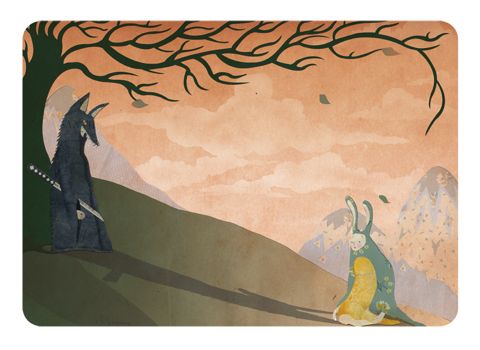
As the tile suggests, my inspiration came from the sensation you have in the morning when you are in a dream like state. I imagined myself floating in comfort and this floating feeling brought the nautical theme to mind with the water inhabited by jellyfish and sea creatures. The male character who is floating within the cut out waves and wearing a stage cape whilst holding a little boat represents vulnerability and innocence.

octo2Sarahdennis

Illustration by Sarah Dennis

What’s your artist background?
I moved from my hometown Brighton to Bristol in 2005 to complete a degree in illustration at the University of the West of England. My work developed over this time and I found that I enjoyed using collages to create whimsical narrative based artwork . After graduating I stayed in Bristol to work on a variety of creative projects. During this time I wrote, illustrated and published a children’s book called “Toby”. I also spent much of my time working with a creative collective called “Hot soup”. The group embarked upon several diverse projects: hosting drawing based events, creating cardboard creations for theater productions and completing bespoke illustrations for clients. After exhibiting a solo show at the “Here” Gallery I moved from Bristol to London were I now spend my days working in a studio in Stoke Newington along side many inspiring artists and illustrators.

wolfandrabbitflatSarahDennis

Illustration by Sarah Dennis

How does music influence/inspire/interact with your art?
After having an idea of what I would like to create whether it is for an exhibition or a piece of commissioned work, I find that music plays a very large part in the process. Having got my idea, with my materials and papers at the ready, the next thing to do is to put on the headphones and find the right album that complements the mood and tone of the artwork. This helps and even influences my art in the same way as working alongside other artists.

See Dreamboat Exhibition at Start Gallery, (via Top Deck) Start The Bus, Bristol

Categories ,art, ,Ben Steers, ,Dave Bain, ,Dreamboat Records, ,exhibition, ,illustration, ,inkygoodness, ,interview, ,Leila Shetty, ,music, ,Sarah Dennis

Similar Posts:


Amelia’s Magazine | An interview with Súa Agapé: Amelia’s Colourful Colouring Companion featured artist.

Sua Agape Artwork 2
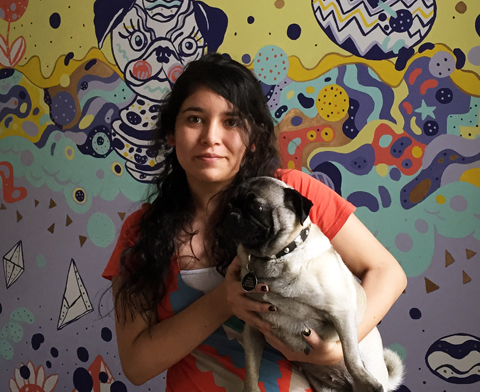
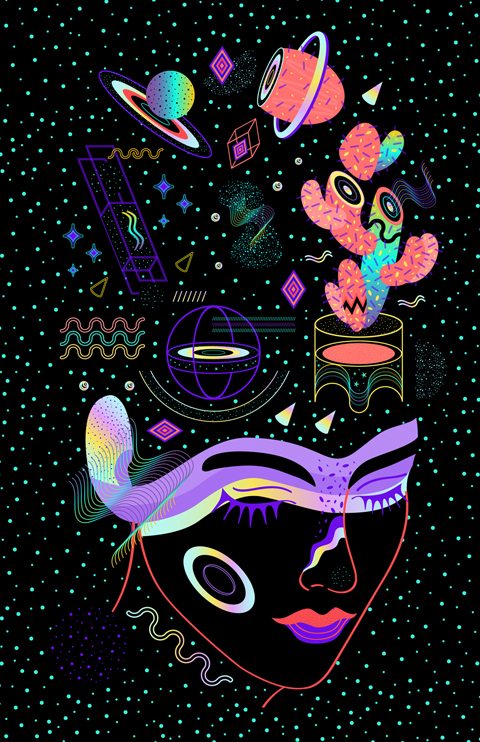
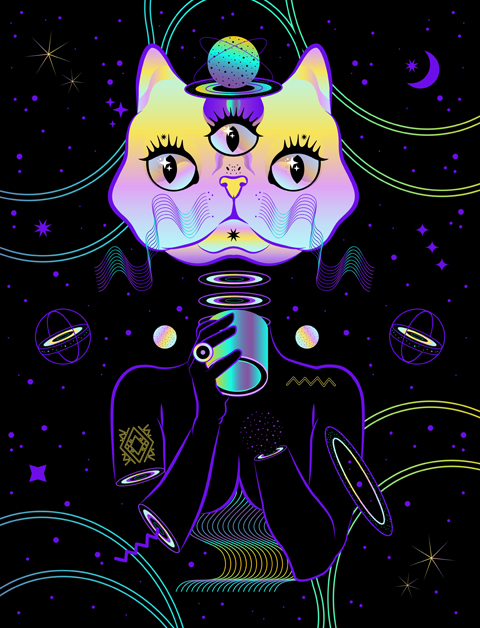
Súa Agapé is another fantastic instagram find for Amelia’s Colourful Colouring Companion, creating cosmic illustrations inspired by a love of cacti and imaginary worlds. Read on to find out more about this Guatemalan artist.

Sua-Agape-potrait
How did your parents inspire you as a child?
I remember when I was a child I always saw my dad drawing. He always had me next to him with his rapidographs, ink, pencils and rulers. I still own some of his art tools; it’s like a childhood memory for me. My mother is an Industrial Fashion Designer and also a Visual Art Teacher, so I grew up watching both of them doing a lot of designs, drawings and projects. They gave me their art supplies and tools to play with and I really enjoyed interacting with their everyday tools. I remember I used to paint all the walls of the house, creating sketches with different materials, because my parents invited me to create even as a small child.

Sua Agape Artwork 9
How does your country inspire your work?
Guatemala is a multicultural and multi-ethnic country with many languages and Mayan heritage, so you can take inspiration from every place; and I often get inspired by the colours and patterns of the traditional costumes of each ethnic group. It’s great to have a beautiful country with such amazing wildlife and fauna to explore on new adventures!

Sua Agape Artwork 6
Where did you study and how did you move into illustration more recently?
I studied Graphic Design at the University of San Carlos of Guatemala and Digital Creativity at Digital Invaders in Mexico. These careers complement my passion for illustration and they helped me to develop my skills as an illustrator. A few months ago I decided to start working on my own as a designer and freelance illustrator and it’s awesome. For now I’m working on some new projects to develop my illustrations for designs on textiles prints for shoes, t-shirts and bags. I really love working on interesting new projects or collaborations so feel free to contact me.

Sua Agape Artwork 8
How easy is it to get good work in Guatemala and how have you found work abroad?
Every year in Guatemala the number of designers in competition for work is increasing as in all growing cities. But if you’re a good designer or illustrator with a good portfolio then you’ll find work easily. I find work abroad through posting my artworks online and submissions, etc. Internet and social media facilitates the work life!

Sua Agape Artwork 5
Can you tell us more about your various exhibitions around the world?
Last year I had the opportunity to participate in the ‘Dibuja Guatemala’ project for the Guatemalan Cultural Center of Spain. All the artists worked on a traveling sketchbook, drawing and capturing the Guatemalan streetlife and the sketchbooks than travelled to Spain and were exhibited in a gallery. I also had the opportunity to participate in the Glug Birmingham & Inkygoodness Poster exhibition. They called for illustrators to participate on a poster design competition so I participated, and although my poster design didn’t win all the finalists ere featured in the event exhibition, so I was very excited and happy to have my poster in London! This year I’m participating in the Sketchbook Project, so one of my sketchbooks is traveling around the United States in a Mobile Library. I love this project because I can share with other people my inspiration at a specific time, stored in the sketchbook.

Sua Agape Artwork 7
When did you first become interested in the Cosmos?
If I were not an illustrator I would love to be an astronaut. But I much prefer to draw and be an illustrator. So I will be an astronaut in another life. In the meantime, I will draw the entire universe. :)

Sua Agape Artwork 1
Why is purple your favourite colour?
It’s been my favorite colour since I was a child. All my things were purple; it’s a colour that makes me feel at peace and in another world because it’s so magical and mysterious at the same time. I love to see how purple can mix with other colours.

Amelias-Magazine-by-Sua-Agape-web
What inspired your colouring book artwork?
The mystery of other worlds. I love imagining what might happen in another dimension, universe or time. What happens when you take part in your own dreams? I hope people who see these pages will feel like an astronaut traveling to another fantastic world. It’s an invitation to see and stay in my cosmic world.

Sua Agape Artwork 4
What kind of products and images do you like to embroider and screen print?
All kind of textile products like t-shirts, bags, patches, pillows, shoes and maybe some jewellery. But I still want to print on paper too. I’m really excited about working on my new project and learning a lot of textile printing techniques.

How are you building your own brand and what does it encompass?
Before anything else I will focus on design and illustration for textiles but I’ll always be working as an illustrator for different projects. More surprises are coming soon!

Find Súa Agapé and many other artists featured in my upcoming Amelia’s Colourful Colouring Companion, funding on Kickstarter very soon!

Categories ,#ameliasccc, ,Adult Coloring Book, ,Adult Colouring Book, ,Amelia’s Colourful Colouring Companion, ,Coloring, ,Coloring Book, ,Colouring, ,Colouring Book, ,Dibuja Guatemala, ,Digital Invaders, ,Glug Birmingham, ,Guatemala, ,Guatemalan Cultural Center of Spain, ,inkygoodness, ,interview, ,Sketchbook Project, ,Sua Agape, ,University of San Carlos of Guatemala

Similar Posts:


Amelia’s Magazine | An Interview with Illustrator Jordan Andrew Carter

Jordan Carter

A self-proclaimed ‘illustrational hustler/graphical wizard’, Jordan Andrew Carter uses detailed pencil drawings and contrasting block shapes to ‘mystify and amaze your human see-globes’. This rising star graduated from Norwich University of the Arts last year and has just started to pencil a name for himself in the biz. While illustration is one of his big life aims, he also mentions his other aspirations: ‘my current life goal is to own a pug and live near the sea. I also have a HUGE weakness for biscuits, and believe if you replaced money with biscuits the world would be a happier place.’ Dividing his time between ‘Northamptonshire’ and Essex, pencils and Poscas are his ‘weapons of choice’.

Jordan Carter

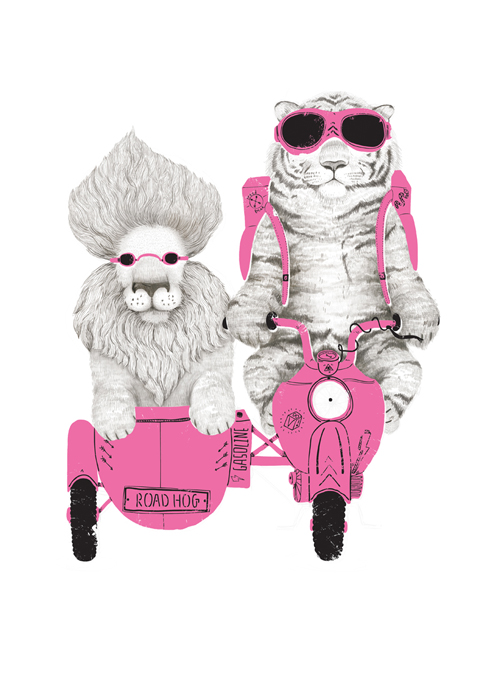
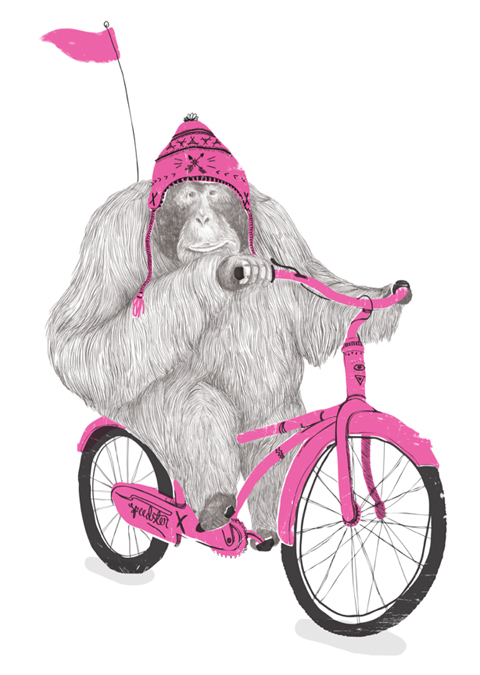
Jordan paints what can only be described as ‘fairytales high on Posca fumes’. His detailed wildlife pencil drawings (which remind me of the work of Ohh Deer’s Jamie Mitchell ) are mixed with bright, block colours. Delightfully over the top and topped off with a sprinkling of humour, Jordan‘s illustrations are visual jokes with lashings of both elegance and fun. There’s a touch of Discworld in there too, in the sense that worlds that are balanced on top of animals crop up more than once. There’s even a smidge of Narnia in another of his drawings. Whether it’s a whale with the weight of the world on his shoulders, an orangutan on a pink bicycle, or a leopard wearing a headdress, the images all bring to mind a fantasy land with a dash of urban life. I can’t help but think that stories would have been much more fun when I was a kid if Jordan was involved. I spoke to this new kid on the block about his latest projects and love of desk clutter.

Jordan Carter

What kind of projects have you worked on recently?
I recently took part in Inkygoodness and Ammo Magazine‘s beermat character/ Poop Deck Exhibition at the Coningsby Gallery in London which was amazing. It was pretty awesome to take part and exhibit alongside some of the illustrators that I really admire like Hattie Stewart, Yema Yema and James Burlinson. I did a piece for Creative England‘s One Thing I Know publication which sold out last week! I’m also working on creating my own clothing shop/ brand called Woodless.

Jordan Carter

There’s a definite storytelling element to your work, were you a big reader as a kid?
As a kid I preferred to be outside causing havoc like a little ruffian rather than sitting inside reading. I’m one of those people that need visual stimulation so I don’t really read a lot. If a book doesn’t have copious amounts of imagery then my mind wanders so I tend to stick to magazines. Articles are usually short and sweet with killer images, which is perfect for me.

Does what’s happening in your life affect your illustration?
In terms of inspiration: definitely not. When I sit down to draw it’s a getaway for my brain so I would rather focus on anything except what’s happening in my life. Time and money are the things that affect it most; I can’t currently spend all day everyday drawing even though I would love to so it’s just a night-time pursuit at the moment.

Jordan Carter

Is there a singular moment that sums up why you decided to become an illustrator?
Originally I wanted to become a Fireman until I realised I was scared of heights and my dreams were dashed. I don’t think there was a specific moment when I knew I wanted to become an illustrator. I’m not really a planner, I studied Fine Art at college and then Games Art at university so I guess I only knew I wanted to be an Illustrator when people started calling me it. It’s something I’ve always done and enjoyed so I’ve kind of naturally fallen into being an Illustrator.

Jordan Carter

You use mixed-media a lot in your art, is there something that compels you to mix-it up a little?
I’ve always been able to sort of adequately draw things and people but I became a massive fan-boy of various print processes and anything hand printed when I met my Graphic Designer girlfriend at university. My abilities and influences just seem to lend themselves to creating something that is a blend of everything I know or have learnt; also, it stops me getting bored because I can play about with more ways of making an image.

Jordan Carter

There’s a lot of humour in your work, do you think funniness is important in contemporary illustration?
For sure! I think if you can make someone smile, then you’re really connecting with them, so I would rather do that as opposed to just creating something that looks nice. Humour is one of the most important things in life, I think it naturally filters through into your work if you want it to or not.

Jordan Carter

What is your dream commission?
I’d love to do some larger scale mural work in a shop!

Do you really enjoy long starlit walks along the soggy shoreline and apple bobbing in baskets of kittens?
Don’t tell PETA, all the kittens consented.

Jordan Carter

Describe your desk
My desk is pretty standard to be honest, it’s white and surrounded by clutter and illustrative trinkets. There are shelves next to it filled with cardboard elephant heads, vinyl toys, paper toys, books, a skull, Lego people, zones and vintage illustrations. There is also a cube man called Earnesto Cubeman the First that sits on top of my iMac.

Jordan Carter

Jordan Carter

What’s your strangest influence?
Anything on the dark side of Youtube, if you just keep clicking you will eventually come out the other end feeling weird and questioning what you just watched. One time I spent an hour flicking through videos of hornets fighting wasps…

Is there a font you love to hate?
There are a lot of fonts I hate but none that I love to hate. I’m a huge sucker for pretty much anything hand-drawn, it all looks so fresh and natural.

Jordan Carter

All illustrations courtesy of Jordan Carter. You can view his portfolio here www.jordanandrewcarter.co.uk/

Categories ,Ammo magazine, ,art, ,artist, ,Coningsby Gallery, ,Creative England, ,graphic designe, ,hand drawn, ,Hattie Stewart, ,illustration, ,illustraton, ,inkygoodness, ,James Burlinson, ,Jordan Carter, ,newcomer, ,Ohh Deer, ,Poop Deck, ,Woodless, ,Yema Yema

Similar Posts: